
Euphorbia beharensis
Euphorbia beharensis
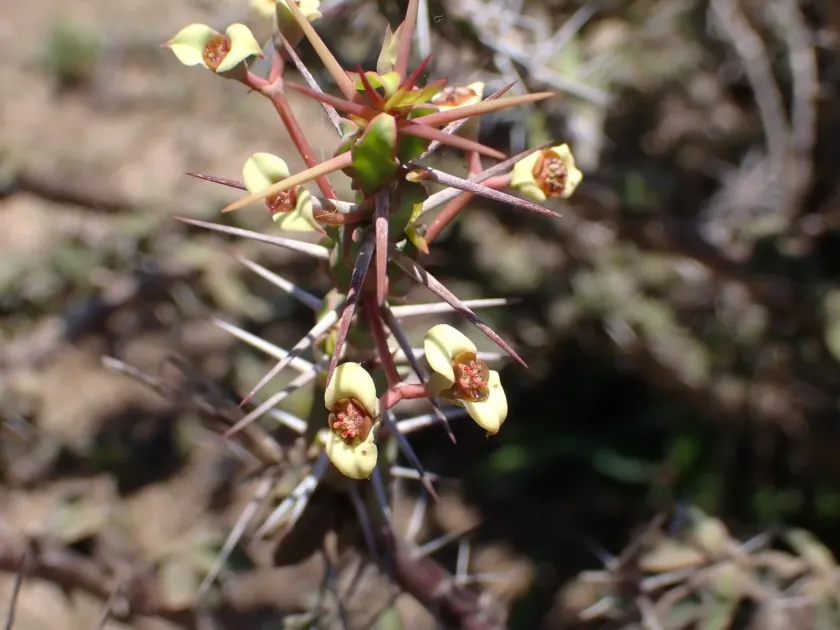
Description
Growing requirements
Euphorbia beharensis belongs to the Euphorbiaceae family and is native to the arid regions of Madagascar. It is a highly distinctive succulent shrub known for its bronze-colored, deeply crinkled leaves.
Botanically, this species is well-adapted to drought, featuring a succulent trunk and branches that store water, allowing it to withstand long periods without rainfall in its natural habitat.
To cultivate this plant successfully, one must provide a sunny location with plenty of bright, indirect, or direct light. It thrives in warm environments with good air circulation.
The substrate must be extremely well-draining. A mix of potting soil with a high ratio of pumice or grit is recommended to prevent water retention around the root zone.
Watering should be done sparingly, especially during the winter dormancy period, allowing the soil to dry out completely between sessions to mimic the native seasonal changes.
Main diseases and pests
The primary threat to Euphorbia beharensis is root rot, typically caused by overwatering or soil that retains moisture for too long, leading to tissue decay.
Pests such as mealybugs and spider mites are common enemies, as they can hide in the crevices of the wavy, textured leaves, making them difficult to detect and eradicate.
Like many members of its genus, this plant produces a milky latex that is toxic and irritating to the skin and eyes, requiring careful handling during maintenance.
If an infestation occurs, manual removal with alcohol-dipped swabs or systemic insecticides specific to succulents should be applied to restore plant health.
Maintenance should always emphasize a dry, airy environment, which is the best deterrent against both fungal diseases and common sap-sucking insect populations.