
Euphorbia baioensis
Euphorbia baioensis
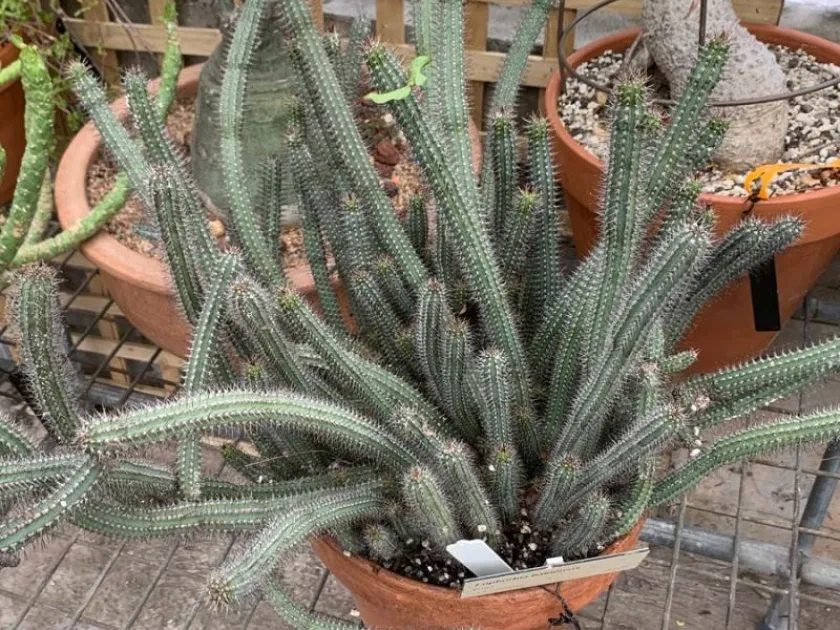
Description
Growing requirements
Euphorbia baioensis is a succulent shrub belonging to the Euphorbiaceae family. This species originates from the arid regions of Kenya, where it thrives in rocky landscapes and harsh environmental conditions.
Botanically, it is defined by its low-growing, clumping habit, featuring numerous cylindrical, ribbed stems that act as reservoirs for water. This structural adaptation allows the plant to survive in areas with minimal rainfall and high temperatures.
The cultivation of Euphorbia baioensis requires a highly porous, well-draining substrate. A mix consisting of mineral components, such as pumice, grit, and coarse sand, is essential to mimic the plant's native rocky habitat.
Exposure to intense sunlight is critical for this species. Without adequate light intensity, the stems tend to etiolate, losing their natural structural integrity and becoming vulnerable to secondary infections or pests.
Temperature management is another key factor in its care. While the plant prefers warm conditions during the growing season, it requires a distinct period of cooling during the winter months, during which watering should be almost completely suspended.
Main diseases and pests
The most significant threat to Euphorbia baioensis is root rot caused by improper watering practices. Excess moisture trapped in the substrate promotes the growth of pathogens that destroy the vascular system of the succulent stems.
Mealybugs are the most common pests affecting this plant. They tend to cluster in the crevices between the stem ribs, making them difficult to detect until the infestation has progressed significantly across the plant surface.
Spider mites can also be a problematic issue, especially when the ambient air becomes excessively dry and stagnant. These mites thrive in hot, arid conditions, leading to discolored and scarred patches on the plant's epidermis.
Preventive maintenance involves regular inspections of the stems and the use of systemic insecticides if pests are detected. Maintaining good airflow is essential to prevent both pest colonization and fungal outbreaks in the collection.
Always handle this plant with care, as it contains a white, latex-like sap that is highly toxic and can cause significant skin irritation or eye damage. Use protective gloves whenever you perform pruning or repotting tasks.