
Euphorbia atoto
Euphorbia atoto
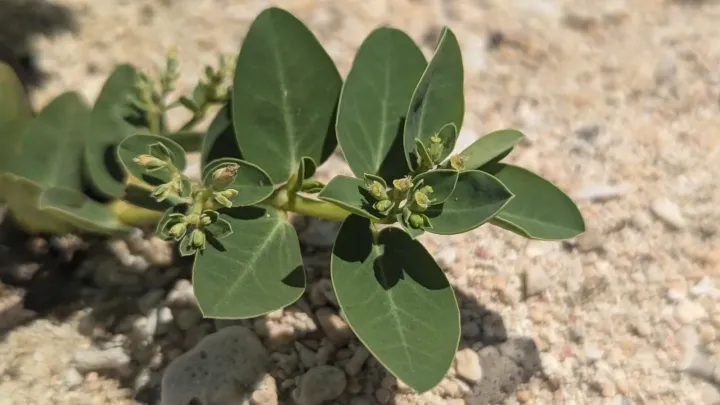
Description
Growing requirements
Euphorbia atoto is a perennial herbaceous plant belonging to the Euphorbiaceae family. This species is naturally adapted to coastal sandy environments, primarily found in tropical and subtropical regions of Asia and Australia, where it plays a role in stabilizing dune ecosystems.
Botanically, it is characterized by succulent leaves and stems capable of storing water for extended periods of drought. This trait makes it highly resilient to environments with high saline content and intense solar radiation, where common crops would fail to survive.
The plant requires well-draining, sandy or loamy soils to thrive. It cannot tolerate heavy or waterlogged soil, which leads to root decay. A pH level ranging from neutral to slightly alkaline is ideal for its development in a controlled agricultural setting.
In terms of climate, Euphorbia atoto requires high levels of luminosity and warm temperatures. It flourishes in full sun and is not cold-hardy, meaning it must be grown in greenhouse conditions in temperate zones to ensure proper growth throughout the year.
Agronomic management focuses on mimicking its natural habitat. Watering must be infrequent, allowing the substrate to dry out completely between sessions. Excessive moisture is the most common cause of failure in cultivating this species.
Main diseases and pests
The primary threats to Euphorbia atoto are fungal pathogens, specifically those causing root rot. These infections thrive in conditions of high humidity and poor soil aeration, necessitating careful management of irrigation and drainage systems.
Insect pests such as spider mites and mealybugs represent a significant concern. These pests puncture the succulent tissue, depleting the plant's resources and creating entry points for secondary bacterial or fungal infections.
The plant produces a milky latex sap, which is a defensive mechanism against many herbivores. While it acts as a deterrent for many pests, it also poses a risk of irritation to humans, making it necessary to use protective gear during pruning or harvesting.
Effective disease management involves rigorous sanitation, including the prompt removal of infected plant debris. Maintaining a proper distance between individual plants is also crucial to ensure adequate airflow and prevent the rapid spread of infections.
If chemical interventions become necessary, it is vital to use systemic fungicides or specific insecticides carefully. Always test any new treatment on a small group of plants before applying it to the entire crop to ensure no phytotoxic reactions occur.