
Candelilla
Euphorbia antisyphilitica
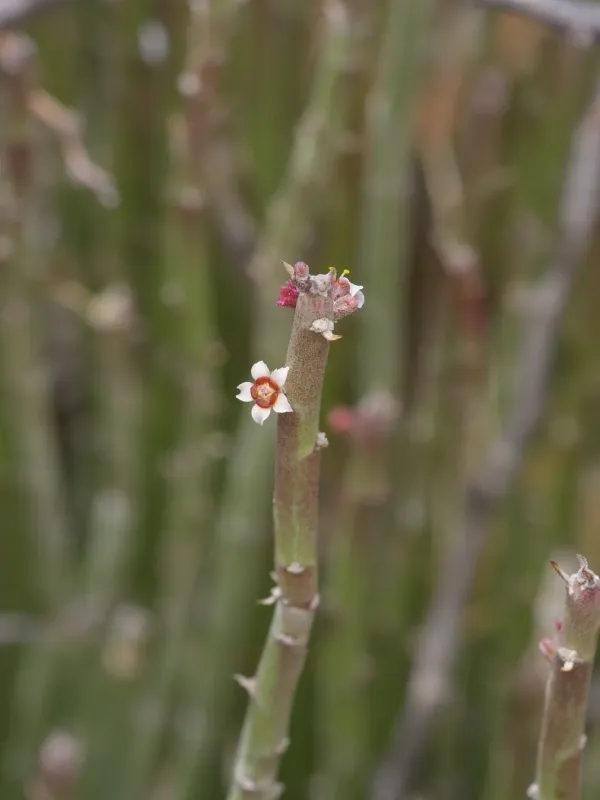
Description
Growing requirements
Euphorbia antisyphilitica, commonly known as candelilla, is a perennial shrub of the Euphorbiaceae family. This desert-adapted plant is characterized by its cluster of thin, leafless, waxy stems that grow in arid environments, reaching heights of up to one meter.
Native to the Chihuahuan Desert, which spans parts of Northern Mexico and Texas, the plant has evolved to survive extreme heat and prolonged droughts. Its ability to thrive in poor, rocky, and sandy soils makes it a unique candidate for xeriscaping and reclamation projects.
The plant requires full sun exposure to stimulate its metabolic processes and wax production. Proper drainage is the most critical factor for its survival; stagnant water in the root zone quickly leads to root rot, which is the primary cause of mortality in cultivated environments.
Temperature requirements are high, as candelilla prefers stable, warm desert climates. While it can withstand occasional frost in its natural habitat, consistent exposure to freezing temperatures may inhibit growth and reduce the quality of the wax coating on the stems.
Cultivating this species involves minimal inputs, as it does not require significant fertilization or irrigation. This makes it an economically low-maintenance crop if established in appropriate arid regions with suitable climatic profiles.
Harvesting
The primary economic value of Euphorbia antisyphilitica lies in the production of candelilla wax. This hard, yellow-brown wax is prized for its high melting point and is widely used in cosmetics, food glazes, candles, and protective coatings for diverse industrial products.
Harvesting techniques involve cutting the stems and subjecting them to boiling water with a small amount of sulfuric acid. This process releases the wax from the plant tissues, allowing it to float to the surface, where it is skimmed off, filtered, and refined for commercial sale.
Sustainable harvesting is a major concern, as the plant grows slowly in the wild. Managing harvest cycles is essential to prevent over-extraction and ensure that populations can regenerate sufficiently to maintain long-term production and ecological stability.
The wax yield can fluctuate based on environmental stress factors, as the plant produces wax as a defensive mechanism against water loss. Consequently, moderate environmental stress can actually benefit the quality and quantity of the wax produced by the plant.
Modern research is focused on developing domestic cultivation systems that maximize wax yield while promoting biodiversity. This shift from wild foraging to planned farming is a crucial step for the future supply of sustainable plant-based waxes.