
Euphorbia antiquorum
Euphorbia antiquorum
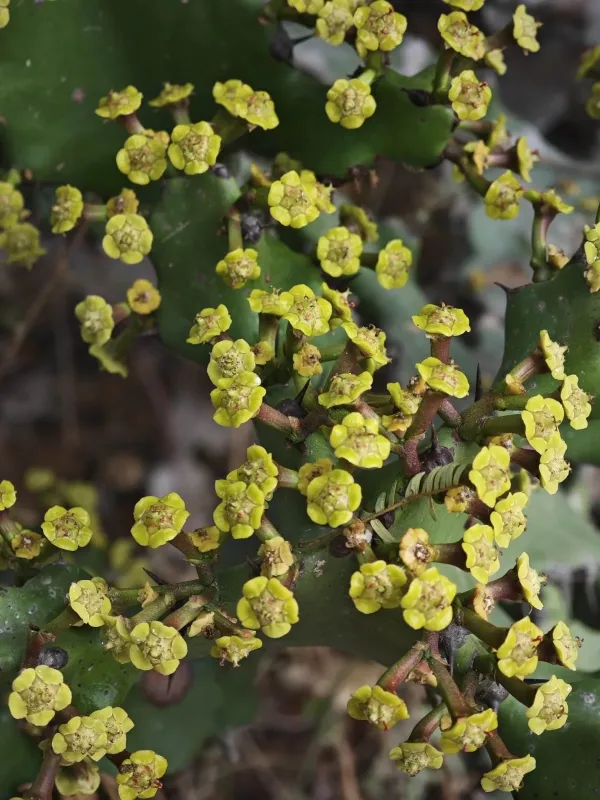
Description
Growing requirements
Euphorbia antiquorum, commonly known as the milkhedge, is a succulent shrub belonging to the Euphorbiaceae family. This species is native to India and Sri Lanka, where it has evolved to thrive in hot, dry, and rocky environments, making it a distinctive specimen for specialized collections.
The plant features succulent, leafless, and branched stems with three to four prominent ridges. Along these ridges, small stipular spines develop, providing defense against herbivores. The plant’s architectural form is highly valued, reaching considerable size under optimal conditions.
For successful cultivation, light requirements are paramount. The plant requires intense, direct sunlight to maintain its structural integrity and prevent etiolation. If grown indoors, a south-facing window or high-output artificial lighting is necessary for healthy development.
Soil composition must prioritize drainage over nutrition. A standard succulent mix, heavily amended with coarse sand, pumice, or perlite, is ideal. Water should only be applied when the substrate has dried out completely, mimicking the cyclic rainfall of its native habitat.
Temperature management is critical for the long-term survival of the crop. Euphorbia antiquorum is not frost-tolerant and requires temperatures consistently above 15 degrees Celsius. During the dormant winter phase, the plant should be kept cool and dry to prevent premature growth.
Main diseases and pests
The primary threat to the health of Euphorbia antiquorum is root and stem rot caused by waterlogged soil. Excess moisture prevents root respiration and fosters anaerobic conditions, where pathogens like Pythium or Phytophthora thrive, leading to rapid decay of the succulent tissue.
Mealybugs are the most common pest associated with this species. They typically congregate in the protected niches along the stem ridges and near the spines. Their feeding habits cause localized damage and can lead to secondary fungal infections due to the sugary honeydew they secrete.
Spider mites can also be a significant issue in dry, stagnant air conditions. Their presence is indicated by stippling on the skin and fine webbing, which drains the plant of its sap and ruins its aesthetic, waxy surface texture.
Effective management includes regular monitoring and the use of targeted systemic insecticides. Application should be thorough, covering all areas of the stem, but caution must be exercised due to the caustic milky latex that is released if the plant is damaged.
Prevention involves maintaining high levels of hygiene in the growing area. Removing fallen debris and ensuring good airflow around the plant helps minimize the humidity pockets where pests and pathogens usually establish their colonies.