
Euphorbia antilibanotica
Euphorbia antilibanotica
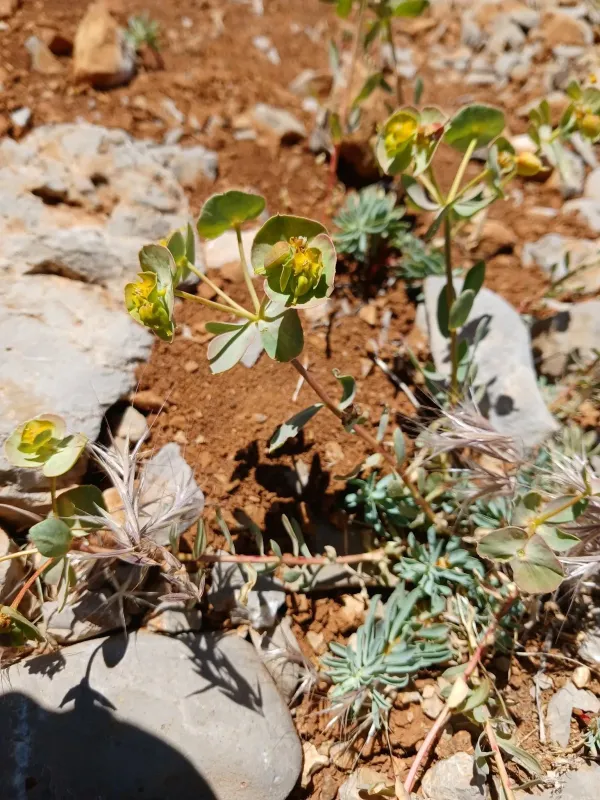
Description
Growing requirements
Euphorbia antilibanotica is a perennial herbaceous plant classified within the Euphorbiaceae family. It is a highly specialized species adapted to the rocky and arid environments of the Antilibanon mountain range.
The natural range of this species is limited to the mountainous regions of Syria and Lebanon. It is predominantly found in high-altitude slopes where soil is sparse and sunlight exposure is intense throughout the year.
The plant thrives in calcareous, stony, and well-drained soils. Such substrate conditions are essential for preventing root rot and ensuring the plant can access minimal moisture trapped within rock crevices.
As a xerophytic plant, it is perfectly suited for a climate with long, hot summers and cool, dry winters. It possesses specialized physiological mechanisms to conserve water and survive extreme solar radiation.
Agronomic management of this species involves maintaining a habitat that mimics its natural arid environment. It requires minimal water and thrives in nutrient-poor soils, making it unsuitable for traditional high-intensity farming.
Main diseases and pests
The primary threats to Euphorbia antilibanotica populations involve soil degradation and human interference. Overgrazing in its natural habitat directly affects the stability of its rocky environment.
Pests such as aphids and spider mites are common threats that target the soft tissues of the plant. These insects can significantly weaken the plant, making it vulnerable to secondary infections.
Root diseases, particularly those caused by fungal pathogens in damp conditions, pose a severe threat. Since the plant is adapted to dry conditions, any excess soil moisture can lead to rapid pathogen proliferation.
Leaf spot diseases, caused by various fungal strains, may occur if the plants are kept in poor ventilation conditions. These diseases disrupt photosynthesis, which is critical for the plant's survival in harsh climates.
Regular inspection is necessary to manage these threats, although, in its natural habitat, the plant relies on its toxic milky sap as a primary defense mechanism against most herbivores.