
Euphorbia anachoreta
Euphorbia anachoreta
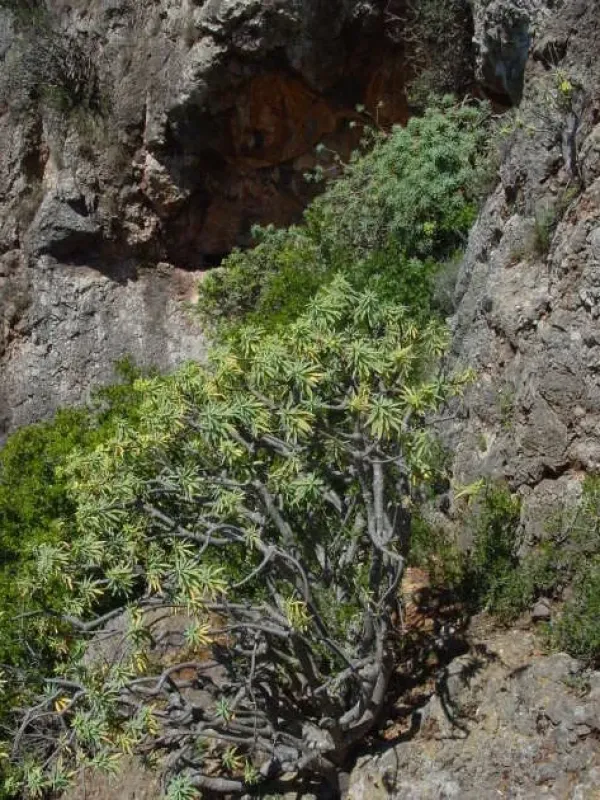
Description
Growing requirements
Euphorbia anachoreta is a notable member of the Euphorbiaceae family, recognized for its specialized adaptation to extreme desert environments. As a succulent shrub, it represents a biological model of survival in regions with minimal precipitation.
The plant features thickened, water-storing stems that allow it to endure prolonged droughts. Its morphology is designed to reduce water loss, utilizing crassulacean acid metabolism to optimize photosynthesis under harsh conditions.
Cultivation of this species requires well-drained, porous soil structures, such as sandy or gravelly loam. Proper drainage is essential to prevent root rot, which is the primary cause of failure in poorly managed environments.
High solar irradiance is necessary for the plant to thrive. It performs best in arid climates with high daytime temperatures, provided it has protection from extreme frost during the winter dormant season.
Economically, Euphorbia anachoreta is studied for its chemical profile and the potential applications of its latex. While not a primary agricultural crop, it is of interest for research in arid land development and the potential extraction of bioactive secondary metabolites.