
Winged spurge
Euphorbia alata
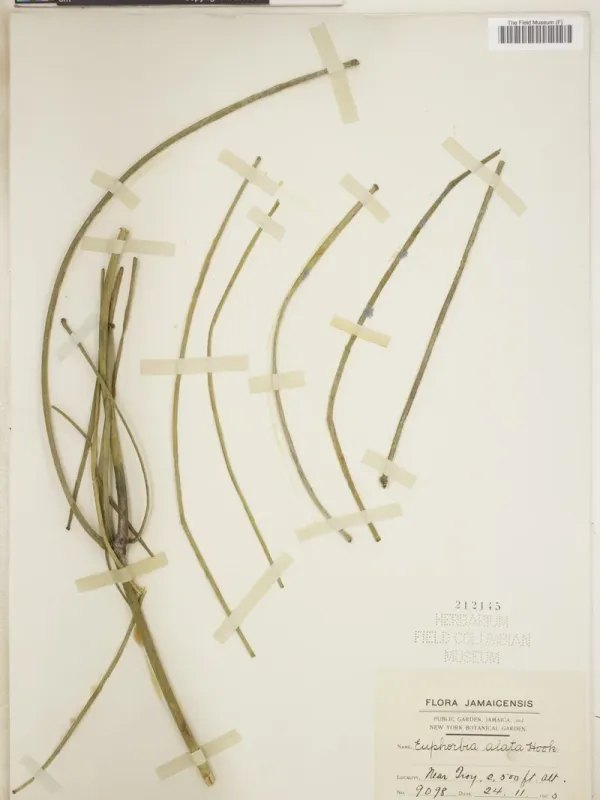
Description
Sowing dates
Winged spurge requires specific soil conditions for successful germination. Sowing should ideally occur when soil temperatures have stabilized between 15 and 18 degrees Celsius, ensuring that the seeds are not exposed to cold stress.
Before sowing, it is advisable to stratify the seeds, which significantly improves the germination rate. The seeds should be planted at a shallow depth of approximately 1 to 2 centimeters, allowing sufficient light penetration for emergence.
The optimal planting pattern involves row spacing of 45 to 60 centimeters, which allows for mechanical weed control and ensures that each plant receives adequate ventilation. Overcrowding should be strictly avoided during the seedling phase.
Watering must be carefully managed after sowing; the seedbed should remain moist but never waterlogged. Using high-quality substrate mixtures can help maintain the required moisture levels without risking seed rot.
Selecting a location with full exposure to sunlight is mandatory. Winged spurge is a light-loving species, and its initial development is heavily dependent on the duration and intensity of solar radiation.
Growing requirements
Euphorbia alata is a crop that thrives in bright, sunny conditions. It is essential to ensure that the cultivation area is free from any shading, as even partial shade can negatively affect the plant's overall growth rate and latex production.
Regarding soil, the species performs best in well-drained, sandy-loam soils. Good permeability is key; heavy or clay-heavy soils are generally unsuitable because they often hold excess moisture, which leads to root suffocation.
While the plant exhibits some drought tolerance, it requires consistent moisture during its peak vegetative growth phase. Irrigation should be applied strategically, ensuring the root zone remains consistently hydrated but well-aerated.
Temperature management is also critical. The plant flourishes between 20 and 25 degrees Celsius. Extreme cold or rapid temperature fluctuations can stress the plant and lead to stunted growth or poor secondary metabolite synthesis.
Nutrient supplementation should focus on a balanced NPK ratio, with an emphasis on magnesium and micronutrients. Fertilizers should be applied in split doses to provide a steady stream of nutrients throughout the growing season.
Yield
The yield of winged spurge is highly dependent on light availability and appropriate agronomic management. Under optimal conditions, the plant can produce a robust amount of biomass suitable for further industrial processing.
In commercial operations, dry matter yields can reach up to 5 tonnes per hectare, provided that the crop is well-maintained and free from competing weeds. Yield quality is primarily assessed by the concentration of specific compounds.
Proper harvesting techniques are vital for maintaining yield potential for subsequent seasons. Removing only the specified amount of biomass allows the plant to continue its vegetative cycle successfully.
High-density planting is generally discouraged due to the risk of resource competition, which can lead to thinner stems and lower overall biomass quality. Spacing adjustments are often made based on local climate data.
Yield consistency is achieved through a combination of precision irrigation and regular nutrient monitoring. Maintaining soil fertility is paramount for long-term production success on the same land.
Main diseases and pests
Fungal diseases, particularly those affecting the roots, represent the most significant threat to Euphorbia alata. Over-irrigation often triggers root rot, which can cause rapid plant decline and failure.
Pests like aphids and spider mites are common in Euphorbia crops. These insects suck sap from the foliage, potentially introducing secondary viral infections that can cripple entire plantations if left unchecked.
Soil-borne nematodes can also jeopardize the crop's health during the initial growth stages. Implementing crop rotation and using sanitized planting materials are the best ways to mitigate these underground risks.
Powdery mildew may occur during periods of high humidity and poor air circulation. Applying systemic fungicides at the first sign of symptoms is critical for protecting the foliage and ensuring continued growth.
An integrated pest management (IPM) strategy, combining biological controls with responsible chemical usage, is recommended to protect the crop while minimizing environmental impact.
Harvesting
Harvesting winged spurge is ideally timed during the late flowering phase, when the concentration of the plant's active secondary metabolites is at its peak. This requires monitoring the developmental stage of the plants closely.
Mechanical harvesting is typically performed with specialized cutters. It is important to set the cutting height correctly to avoid damaging the crown of the plant, which is essential for ensuring potential regrowth.
Immediate post-harvest processing is required to prevent the degradation of valuable chemical compounds. The latex-rich sap needs careful handling, and personal protective equipment is required to prevent skin irritation.
Drying the harvested biomass should be done in a controlled, well-ventilated environment away from direct sunlight. Excessive heat can alter the chemical profile, so temperature regulation is vital during this stage.
Proper storage in moisture-controlled, dark conditions is essential for preserving product quality. Sealed containers help protect the raw material from pests and external environmental factors until it is ready for processing.