
Field spurge
Euphorbia agraria
Description
Growing requirements
Field spurge (Euphorbia agraria) is a perennial herbaceous plant belonging to the Euphorbiaceae family. In agronomy, it is recognized as a persistent and difficult-to-control weed that often infests arable lands, pastures, and roadsides within temperate climate zones.
The origin of this species is linked to the steppe and forest-steppe regions of Eurasia. It demonstrates a high level of environmental plasticity, allowing it to colonize diverse landscapes ranging from light sandy soils to heavy loams, provided there is sufficient sunlight for photosynthesis.
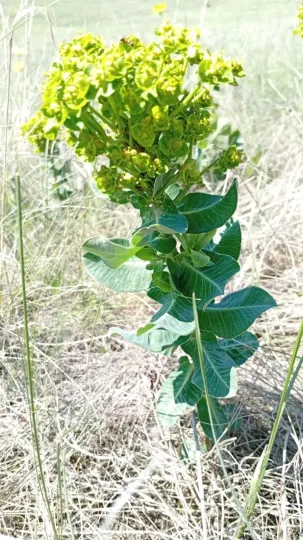
Botanically, the plant is characterized by erect stems, lanceolate foliage, and a complex inflorescence. Like other members of its genus, it contains a milky latex that is toxic to livestock, making the infestation of grazing pastures a significant issue for animal husbandry.
From an agrotechnical perspective, Euphorbia agraria is highly resilient due to its extensive root system. These roots serve as storage organs that allow the plant to regenerate quickly even after mechanical disturbance, such as tillage or cultivation, making traditional weeding methods less effective.
The economic impact is exclusively negative, as the plant competes with main crops for water, nutrients, and sunlight. Efficient management requires a combination of crop rotation and the strategic application of systemic herbicides to exhaust the root reserves of the weed throughout the growing season.
Main diseases and pests
Field spurge serves as a natural reservoir for several plant diseases, including various rust fungi (Uromyces species). These pathogens can complete their life cycles on the spurge, serving as a constant source of inoculum that can later spread to vulnerable cultivated crop varieties.
Various insect pests, such as certain species of leaf beetles and weevils, inhabit the plant during its active growth phase. While they may cause localized damage to the weed's foliage, they are generally not considered effective biocontrol agents for reducing its overall population density.