
Euphorbia aeruginosa
Euphorbia aeruginosa
Description
Growing requirements
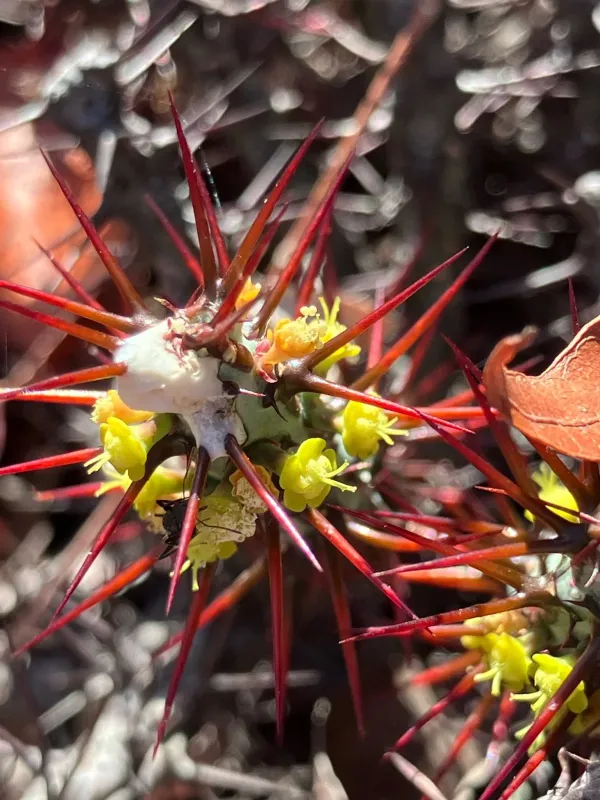
Euphorbia aeruginosa is a compact, succulent shrub belonging to the Euphorbiaceae family. Native to the rocky slopes of South Africa, it is characterized by its bright blue-green stems and distinct rusty-red spines, earning it the common name "Copper Spurge".
As a desert-adapted plant, it requires full sunlight to maintain its structural integrity and vibrant coloration. If placed in shaded areas, the stems will etiolate, becoming weak and losing their signature aesthetic appeal.
The substrate must be highly porous and inorganic. A professional mix should consist of two parts coarse sand, one part pumice, and one part loam-based potting soil, ensuring rapid drainage after every irrigation.
Climate conditions should mimic its native habitat. It thrives in temperatures ranging from 20 to 30 degrees Celsius during the growing season. During winter, it requires a dry dormancy period with temperatures dropping to 10–15 degrees Celsius.
Fertilization is rarely needed but can be applied during the peak growing season using a low-nitrogen, high-potassium liquid fertilizer designed for cacti and succulents to support healthy cellular growth.
Main diseases and pests
The most significant threat to Euphorbia aeruginosa is crown and root rot, primarily caused by improper watering techniques. Overwatering, especially during low-light winter months, leads to rapid decay of the vascular tissues.
Pests like mealybugs often hide within the crevices between the stems and spines, making them difficult to detect early. They weaken the plant by draining sap, leading to stunted development and potential secondary infections.
Root aphids may also be present in the root zone if the substrate remains damp for extended periods. Soil drenches with appropriate systemic insecticides are required to manage severe infestations.
Like many species in the genus, this plant contains a toxic, milky latex that acts as a deterrent to herbivores. Gardeners must handle the plant carefully, as the sap is highly irritating to the skin and potentially dangerous if it reaches the eyes.
Maintaining proper ventilation around the base of the plant is vital. Stagnant air coupled with high humidity provides ideal conditions for fungal outbreaks, which can spread quickly across the succulent clusters.