
Euphorbia abyssinica
Euphorbia abyssinica
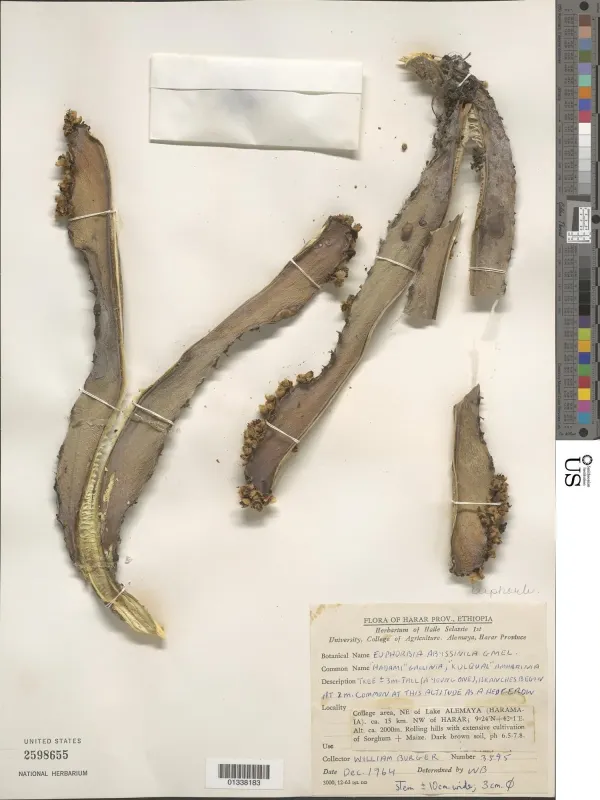
Description
Growing requirements
Euphorbia abyssinica is a prominent member of the Euphorbiaceae family, recognized for its distinct candelabra-like growth pattern. In its native habitat, this succulent develops a robust trunk and can reach significant heights, functioning as a structural element of the landscape.
Originating from the arid regions of East Africa, including Ethiopia and Eritrea, this species is perfectly evolved for survival in harsh, sun-drenched environments. It thrives in regions where water scarcity is the primary limiting factor for most crops.
Cultivation requires exceptionally well-draining soil, ideally rocky or sandy substrates. Proper aeration of the root system is essential, as the plant is highly susceptible to root decay if water accumulates around the base.
Environmental requirements include high light intensity and warm temperatures throughout the year. The species is highly sensitive to cold, and any exposure to frost will severely damage or kill the plant tissues, making greenhouse conditions necessary in temperate climates.
Economically, Euphorbia abyssinica is studied for its potential in producing biomass in arid zones. Additionally, its resilient nature makes it a candidate for reforestation efforts in degraded semi-arid lands, contributing to soil conservation.
Main diseases and pests
The primary agronomic threat to Euphorbia abyssinica is the proliferation of fungal pathogens resulting from excessive moisture. Phytophthora and other soil-borne fungi represent a major risk, especially in low-oxygen soil conditions.
Mealybugs constitute the most common pest challenge, as they frequently cluster in the succulent stems to feed on sap. Their presence not only drains plant energy but also facilitates the entry of viral and bacterial pathogens.
Scale insects also pose a threat, particularly on mature, woody segments of the stems. If left unchecked, these pests can lead to stunted growth and diminished overall vigor of the population in the field.
The milky latex produced by the plant acts as a chemical defense mechanism, but it can also be a hazard to human health. Handling the plant requires protective gear to prevent skin irritation or eye damage caused by the caustic sap.
Integrated pest management strategies focusing on drainage optimization and the use of targeted systemic insecticides are effective ways to maintain the health and productivity of the succulent crop.