
Abrams' spurge
Euphorbia abramsiana
Description
Growing requirements
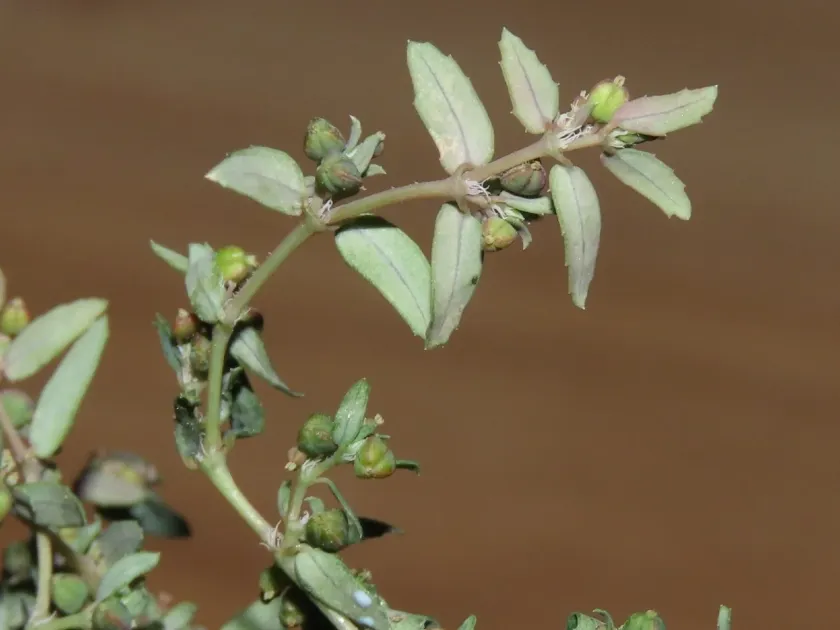
Abrams' spurge (Euphorbia abramsiana) is a prostrate annual herb belonging to the Euphorbiaceae family. It is predominantly recognized as a weed species within agricultural and disturbed habitats in its native range.
The species is indigenous to the desert regions of the southwestern United States and northwestern Mexico. It thrives in open, sandy soils and is well-adapted to high-heat, arid climates where other vegetation often struggles.
Developmentally, it requires significant solar radiation and warmth for optimal growth. It is highly drought-tolerant, utilizing a deep taproot to access subsoil moisture during periods of minimal precipitation.
Soil management for areas prone to Abrams' spurge focuses on maintaining a dense canopy of primary crops to deprive the weed of sunlight. Because it prefers disturbed areas, minimal tillage practices can sometimes reduce its establishment.
In terms of agricultural suitability, it holds no value as a forage or fiber crop, and its chemical composition necessitates caution when it appears in grazing lands due to potential toxicity to livestock.
Main diseases and pests
The plant produces a milky latex containing diterpene esters, which acts as a deterrent against most generalist herbivores and insect pests, reducing the risk of significant vegetative defoliation.
Fungal pathogens represent the primary biological threat to the plant, particularly root rot organisms that exploit wet, stagnant soil conditions. These infections often lead to systemic failure of the plant tissue.
Agricultural interference remains the most effective management strategy. Since the plant is highly prolific in seed production, removing the plants before they reach the flowering stage is critical to preventing soil seed bank accumulation.
The weed acts as a significant competitor for water and nutrients, particularly in fields with wide-row spacing. Its prostrate growth habit allows it to exploit space that is difficult to reach with standard mechanical weeding equipment.
Chemical control remains difficult due to the waxy cuticle on the leaves, which hinders the absorption of systemic herbicides. Adjuvants are typically required to improve the efficacy of post-emergence treatments against this species.