
Eucnide urens
Eucnide urens
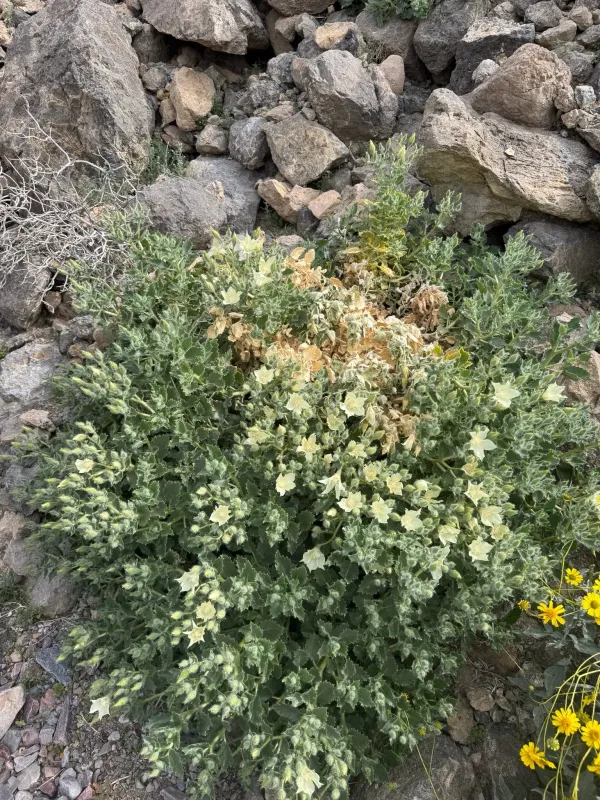
Description
Sowing dates
Sowing Eucnide urens seeds requires a warm, frost-free environment, ideally mimicking the natural desert spring. Seeds should be surface-sown onto a well-draining mineral substrate, as they require exposure to light for optimal germination.
Maintaining a constant temperature between 22°C and 25°C is crucial for successful seedling emergence. High humidity levels during the germination phase must be balanced with adequate ventilation to prevent "damping off" of the tender sprouts.
The use of a sterile, coarse-textured medium is highly recommended to promote root health from the earliest stages. Covering the seeds with a very thin layer of fine grit can help stabilize them while still allowing light penetration.
Once true leaves appear, seedlings should be transitioned to full solar exposure. Any delay in light access at this stage will result in etiolation, significantly weakening the plant structure and reducing its future flowering potential.
Careful handling is required during transplanting, as the root system is highly sensitive to disruption. It is advisable to sow seeds in individual peat or biodegradable pots to minimize root disturbance when moving to the final location.
Growing requirements
Eucnide urens is a member of the Loasaceae family, naturally occurring in the rocky, arid habitats of the southwestern United States and Mexico. It is a heliophilic plant, demanding maximum sunshine to thrive and produce its characteristic flowers.
The ideal soil profile for this species is porous, sandy, or gravelly, with excellent drainage capabilities. Heavy or moisture-retentive soils will inevitably lead to root rot, which is the primary cause of plant failure in non-native climates.
Watering management is the most critical aspect of the plant's agronomy. It requires a "soak and dry" approach: providing enough moisture for active growth, then allowing the substrate to dehydrate completely before the next irrigation cycle.
This species is highly drought-tolerant once established. Supplemental fertilization should be applied sparingly, as high nitrogen levels can negatively impact the plant's hardiness and force abnormal, succulent growth that is susceptible to collapse.
The plant features specialized stinging hairs on its leaves and stems as an evolutionary defense mechanism. Growers should wear protective gloves when tending to the plants to avoid skin irritation from these microscopic barbed structures.
Main diseases and pests
Root rot caused by stagnant water is the most severe threat to Eucnide urens. This is often exacerbated by soil compaction or the use of heavy, peat-heavy composts that retain moisture for too long.
Spider mites are common pests in dry, indoor environments or greenhouses. Regular monitoring and maintaining proper air circulation around the plants are effective preventive measures against mite infestations.
Fungal leaf spots can occur if the foliage is frequently wetted during irrigation. It is essential to water only at the base of the plant to keep the leaves dry and reduce the likelihood of disease development.
Nutrient deficiency, particularly regarding micronutrients, may manifest in chlorotic foliage if the soil pH is not maintained within the slightly alkaline to neutral range. Periodic soil testing is advised for greenhouse cultivation.
While the stinging hairs protect the plant from most mammalian herbivores, insects like aphids can sometimes target new flower buds. Targeted application of horticultural oils or insecticidal soap is recommended if a threshold of infestation is reached.