
Euclinia longiflora
Euclinia longiflora
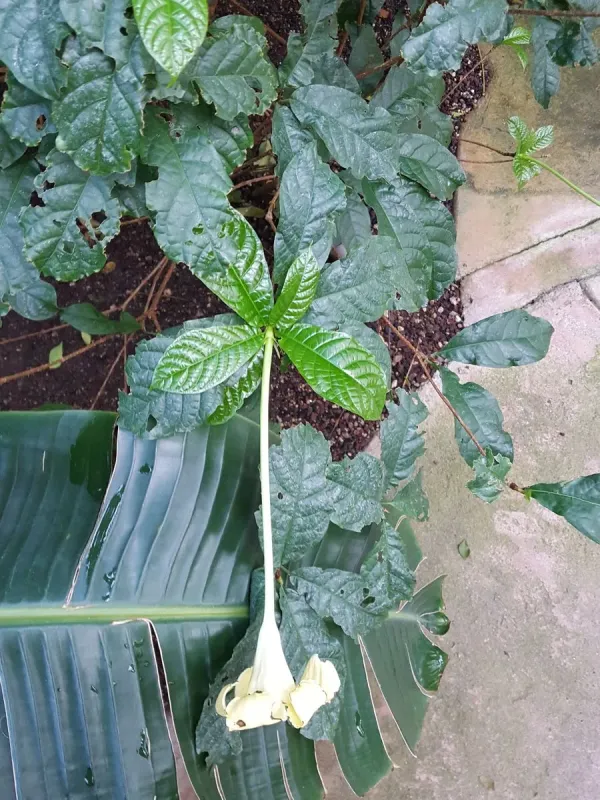
Description
Growing requirements
Euclinia longiflora is a distinct species of evergreen shrub or small tree belonging to the Rubiaceae family. It is native to the tropical regions of Africa, where it thrives in lush, humid forest environments.
The plant requires a stable tropical climate characterized by high humidity levels and warm temperatures ranging between 20°C and 28°C throughout the year. It does not tolerate cold drafts or frost, making greenhouse cultivation essential in temperate zones.
For optimal growth, Euclinia longiflora prefers well-drained, nutrient-rich, and slightly acidic soils (pH 5.5–6.5). The soil should be kept consistently moist but never waterlogged to ensure healthy root development.
The plant needs bright, filtered light to mimic its natural environment beneath the forest canopy. Excessive exposure to direct sun can lead to leaf scorching, whereas insufficient light significantly limits the flowering potential.
Agrotechnical management involves meticulous watering, supplemental fertilization with micronutrients during the growing season, and occasional pruning to maintain a desirable canopy shape and promote air circulation.
Main diseases and pests
The most common pests affecting Euclinia longiflora include scale insects, mealybugs, and spider mites, all of which thrive in low-humidity conditions or poor ventilation settings.
Fungal infections, such as root rot, are primarily caused by overwatering or soil compaction that restricts drainage. Proper soil management and the use of sterile substrates are essential for prevention.
Leaf spots, often caused by bacterial or fungal pathogens, may appear if foliage remains wet for extended periods. Promoting good airflow is the primary mechanical control method for this issue.
Iron chlorosis is frequently observed in container-grown plants, appearing as yellowing of the foliage, which necessitates careful adjustment of the pH balance and the use of chelated iron supplements.
Effective management includes integrated pest and disease control, combining early detection through regular monitoring with the application of horticultural oils or specialized fungicides as needed.