
Woodward's eucalyptus
Eucalyptus woodwardii
Description
Growing requirements
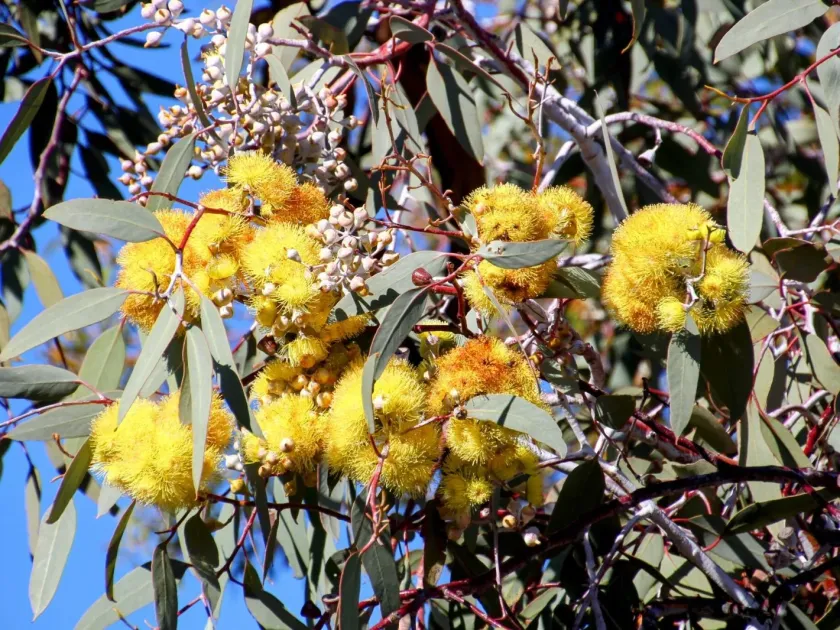
Woodward's eucalyptus (Eucalyptus woodwardii) belongs to the Myrtaceae family. It is a distinctive evergreen tree known for its smooth white bark and striking yellow flowers, which make it a popular specimen in ornamental horticulture.
Native to Western Australia, this species is adapted to arid environments. In cultivation, it demands full sun exposure to maintain its vigor and characteristic form, making it unsuitable for shaded or highly enclosed urban spaces.
The ideal soil conditions for this culture are well-draining, sandy, or gravelly loams. The tree has a deep root system that thrives in porous soil, and it is highly intolerant of waterlogging, which can quickly lead to root decay.
Climatic requirements focus on warmth and long growing seasons. While it exhibits significant drought tolerance once established, it is not frost-hardy, restricting its outdoor cultivation to temperate or Mediterranean-like zones.
Its economic importance is centered on landscape architecture and apiculture, as it serves as a valuable nectar source. In certain climates, it is also harvested for essential oils and high-quality biomass production.
Main diseases and pests
Root rot caused by Phytophthora or similar fungal pathogens is the primary threat to the crop, usually triggered by poor soil drainage and irrigation mismanagement.
Leaf-eating insects, such as beetles and sawfly larvae, frequently target the foliage, causing significant defoliation if left unchecked in large-scale plantations.
Scale insects and mealybugs present a secondary threat, particularly when trees are cultivated in nurseries or confined greenhouse environments with limited airflow.
Prevention involves maintaining adequate plant spacing to facilitate air circulation and monitoring the root zone to prevent moisture accumulation during dormant periods.
Integrated Pest Management (IPM) strategies, including the use of targeted biological controls and safe insecticides, are recommended for managing outbreaks of common pests.