
Erysimum montosicolum
Erysimum montosicolum
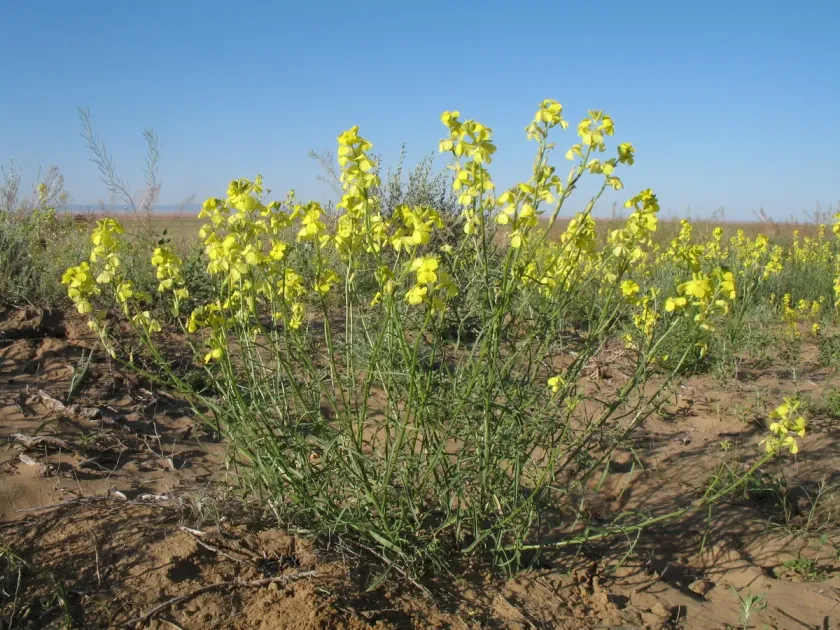
Description
Sowing dates
Erysimum montosicolum belongs to the Brassicaceae family. In agricultural practice, sowing is typically carried out in early spring, once the soil temperature reaches 5-8 degrees Celsius.
To ensure uniform emergence, seeds should be planted at a shallow depth of 1.5–2 centimeters, which provides optimal access to moisture and light for germination.
Late autumn sowing is also possible, which allows seeds to undergo natural stratification, significantly increasing their germination energy in the following spring.
The optimal planting pattern involves row spacing of 30–45 centimeters, facilitating easier field management and weed control during the early stages of vegetation.
During cultivation, it is essential to ensure an even seed distribution, using a seeding rate of approximately 4–6 kilograms per hectare to achieve optimal stand density.
Growing requirements
This plant prefers open, well-lit areas with light, sandy, or loamy soils that possess good water and air permeability.
The crop is characterized by high cold resistance and the ability to withstand moderate drought, although sufficient soil moisture is required for full development during the flowering period.
Soil acidity levels should be close to neutral (pH 6.5–7.5), as highly acidic soils significantly reduce growth rates and the accumulation of biologically active substances.
The application of mineral fertilizers, especially phosphorus and potassium compounds, positively impacts raw material quality and increases plant resistance to unfavorable climatic conditions.
It is important to avoid waterlogging, as excessive moisture in the root system can lead to rot processes and the death of young crops.
Main diseases and pests
The main threats to Erysimum crops are pests from the Brassicaceae family, particularly flea beetles, which can destroy young seedlings in a matter of days.
Common diseases include fungal infections such as powdery mildew and various types of downy mildew, arising from humidity mismanagement and overly dense plantings.
To prevent the spread of pests, crop rotation is recommended, ensuring the plant does not return to the same field within a 3–4 year period.
The application of biological insecticides during early growth stages effectively controls pest populations without compromising the quality of the medicinal harvest.
Phytosanitary monitoring of the fields must be performed regularly, especially during stem elongation and flower bud formation, when plants are at their most vulnerable.
Harvesting
The raw material is harvested during the phase of mass flowering, when the concentration of cardiac glycosides in the aerial parts of the plant reaches its maximum.
Green biomass is mowed mechanically at a height of 5–10 centimeters above the soil surface to avoid damaging the root system.
Harvested mass must be transported to drying facilities immediately to avoid overheating and degradation, which lead to the loss of therapeutic properties.
Drying is carried out in well-ventilated areas or specialized dryers at temperatures not exceeding 40–45 degrees Celsius to preserve the chemical composition.
Properly dried raw materials retain their natural color and mild characteristic scent, maintaining pharmacological efficacy for up to two years under correct storage conditions.