
Common whitlow-grass
Erophila verna
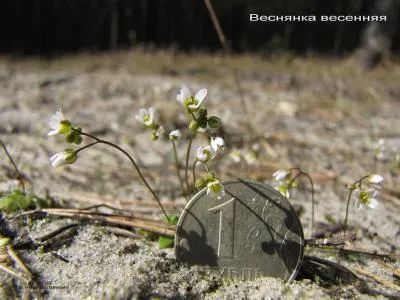
Description
Sowing dates
Common whitlow-grass is a quintessential ephemeral species, completing its entire biological life cycle within a very short timeframe during the early spring season.
Germination occurs as soon as soil temperatures reach favorable positive values, often following snowmelt, allowing the plant to rapidly establish itself in open environments.
The species relies on a large seed bank that matures in late spring and remains dormant in the soil, ensuring the population persists through various environmental fluctuations.
Autumn germination is also observed when conditions permit, leading to the formation of a rosette that overwinters successfully under protective snow or mulch layers.
In managed agricultural systems, the growth cycle of this species is typically halted by early-season tillage operations designed to clear fields for primary crop establishment.
Growing requirements
Belonging to the Brassicaceae family, this plant prefers well-drained, light-textured soils such as sandy or loamy sands where it can face minimal competition.
It is an obligate heliophyte, meaning it requires high levels of light and is incapable of competing in fields with a closed canopy of taller, more vigorous crop plants.
The plant is highly resilient regarding moisture levels, as its ephemeral strategy allows it to escape the limiting effects of summer drought by completing its life cycle early.
Common whitlow-grass is frequently found on disturbed sites, eroded slopes, and areas with low fertility where other species struggle to establish due to nutrient scarcity.
Temperature is the primary driver of development, with the plant demonstrating specialized adaptations to cold spring climates and successfully thriving in suboptimal conditions.
Main diseases and pests
As a member of the mustard family, common whitlow-grass acts as a reservoir for pathogens and pests that can potentially compromise the health of related field crops.
Fungal diseases like powdery mildew are commonly associated with the plant, especially in high-density patches where air circulation is restricted near the soil surface.
Crucifer flea beetles are frequent visitors to Erophila verna, using the plants as early-season host sites, which can lead to increased pest pressure on emerging vegetable crops.
The potential for these plants to serve as bridging hosts makes them a factor of concern in integrated pest management programs aiming to reduce initial pest populations.
Management remains focused on mechanical interventions, as the transient nature of the species often makes chemical control measures non-economical for field-scale application.