
Erophila minima
Erophila minima
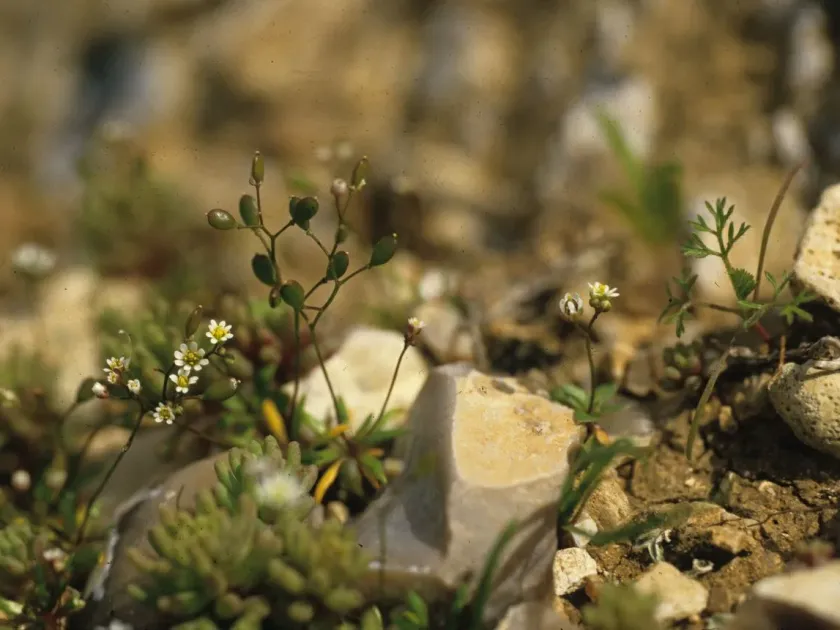
Description
Sowing dates
Erophila minima is recognized as a spring ephemeral, meaning it completes its life cycle very quickly as soon as soil temperatures allow for seed germination.
Seeds of this species exhibit high viability and require specific moisture levels commonly found in the soil during early spring to trigger germination.
The biological development from seedling emergence to fruit maturation is highly accelerated to ensure seed production before the onset of summer heat.
In agricultural settings, this plant typically emerges alongside winter cereals, utilizing the early spring resources before the main crop reaches its peak development.
Emergence dates vary by region, usually occurring in late March or April as the snow melts and the top layer of soil begins to warm up significantly.
Growing requirements
As a member of the Brassicaceae family, Erophila minima displays strong adaptability to various soil types, particularly favoring well-drained, light textured soils.
The plant performs best in sandy or loamy soils where the drainage is sufficient to prevent waterlogging, which the plant does not tolerate well during its growth.
Erophila minima is distinctly heliophilic, meaning it requires full exposure to sunlight and will struggle to survive in shaded areas within a dense field canopy.
Nutrient requirements are modest; the plant is capable of surviving in environments with low nutrient availability, which is a common trait for early spring colonizers.
Effective management in crop fields involves maintaining soil health and using early mechanical weeding to minimize the competitive pressure of such species.
Main diseases and pests
Because it belongs to the Brassicaceae family, this species can serve as a natural reservoir for pathogens that also affect major oilseed and vegetable crops.
The plant is susceptible to powdery mildew, especially during cool, damp spring periods, which can severely limit the growth of its foliage and flowers.
Flea beetles are the primary insect pests, often feeding on the leaves and stems shortly after the plants emerge, which can weaken the population.
Aphid infestations may occur on the flower stalks, potentially hindering seed development and reducing the overall reproductive success of the plant.
To control these threats and limit the spread of pests to crops, integrated pest management practices such as early cultivation are highly recommended.