
Eremocrinum albomarginatum
Eremocrinum albomarginatum
Description
Growing requirements
Eremocrinum albomarginatum is a rare herbaceous perennial plant belonging to the Asparagaceae family (formerly classified within the Lily family). This unique botanical culture is adapted to the extreme growth conditions of arid zones.
The primary distribution range of the plant includes desert and semi-desert territories of North America, particularly the arid regions of the Rocky Mountains and intermountain plateaus. The culture has evolutionarily adapted to soils with low humus content and high salinity levels.
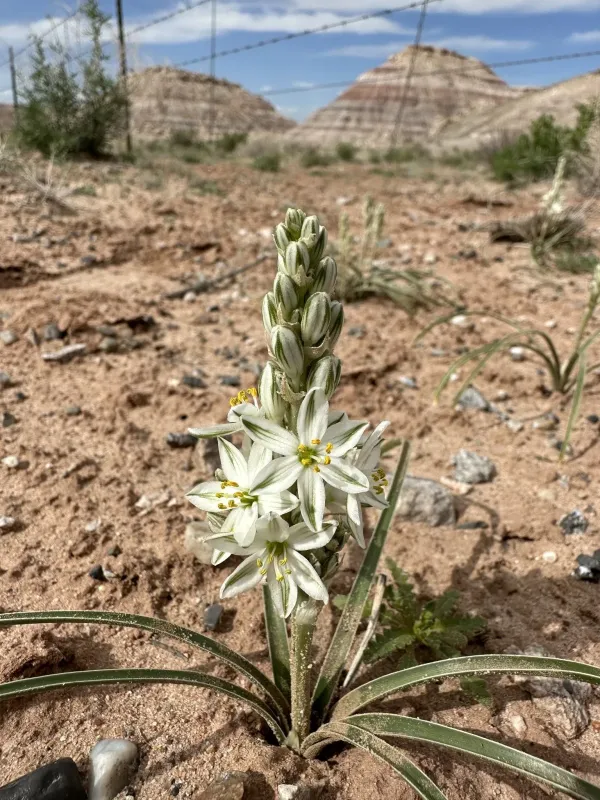
The plant possesses a specific morphology: a robust root system ensures survival during moisture deficits, while a basal rosette of narrow leaves with a distinctive light-colored margin helps minimize transpiration. During the growing season, the plant demonstrates high resistance to sharp diurnal temperature fluctuations.
From an agrotechnical perspective, Eremocrinum requires well-drained, predominantly sandy or rocky substrates with a neutral or slightly alkaline pH. The culture is extremely sensitive to water stagnation in the root zone, which can provoke the development of root rot.
Economic use of this species is limited to decorative horticulture within collections of succulents and xerophytes. Due to its hardiness, Eremocrinum is promising for landscape design in arid regions where the establishment of traditional green spaces is not feasible without heavy irrigation.
Main diseases and pests
Typical threats to this species in cultivation include fungal infections resulting from soil waterlogging or poor aeration of the root system. Strict adherence to irrigation regimes is necessary for disease prevention.
Damage can be caused by phytophages common in open spaces, such as various species of aphids and mites that infest the vegetative parts of the plant. Regular phytosanitary monitoring allows for the control of infestation centers during the early stages.