
Eragrostis turgida
Eragrostis turgida
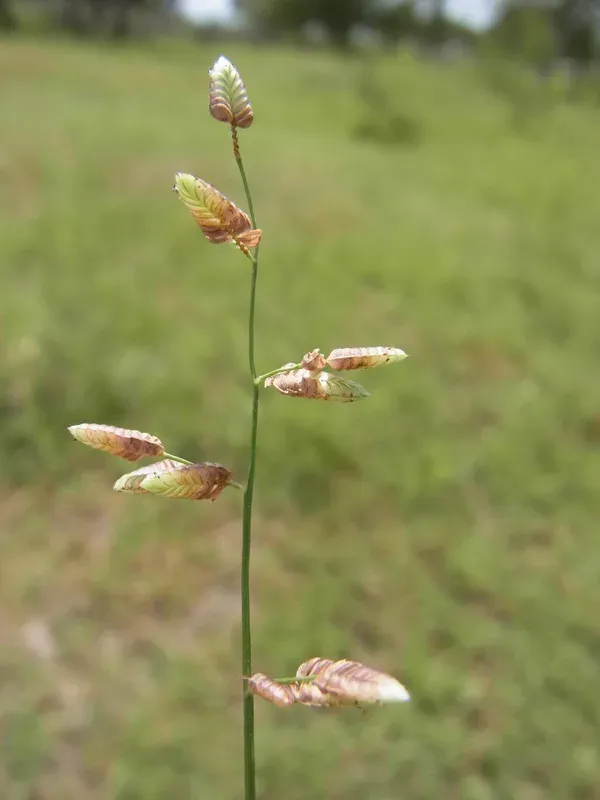
Description
Growing requirements
Eragrostis turgida is a perennial grass species belonging to the Poaceae family. It is a highly specialized plant evolutionarily adapted to thrive in harsh, arid, and semi-arid environments where water availability is extremely limited and irregular.
The native range of this species extends across the desert and semi-desert regions of North Africa and the Arabian Peninsula. It plays a critical ecological role as a pioneer species that stabilizes sandy soils and prevents severe wind erosion in these fragile ecosystems.
Botanically, it forms dense tufts with distinctive inflated spikelets, which serve as a diagnostic feature. The plant possesses a robust and deep-reaching root system, allowing it to extract moisture from deep soil layers even during the height of the dry season.
This grass has minimal soil fertility requirements and is exceptionally tolerant of saline conditions. It prefers sandy or rocky substrates where competition from other botanical species is low, thriving best under full, intense solar exposure.
In terms of agricultural utility, it serves as a valuable forage resource for nomadic livestock, particularly camels and goats. Its ability to remain green or retain nutritional value during periods of drought makes it essential for pastoral livelihoods in its natural range.
Main diseases and pests
The primary biological threats to this species are rust fungi, which may occur if the plant is subjected to uncharacteristic periods of high humidity. Despite this, it generally exhibits high natural immunity compared to domesticated forage grasses.
Pests affecting Eragrostis turgida are mainly orthopteran insects, such as locusts and grasshoppers. While these insects can consume significant portions of the foliage, the plant's resilience and ability to recover quickly under favorable conditions keep these impacts manageable.