
Silve's lovegrass
Eragrostis silveana
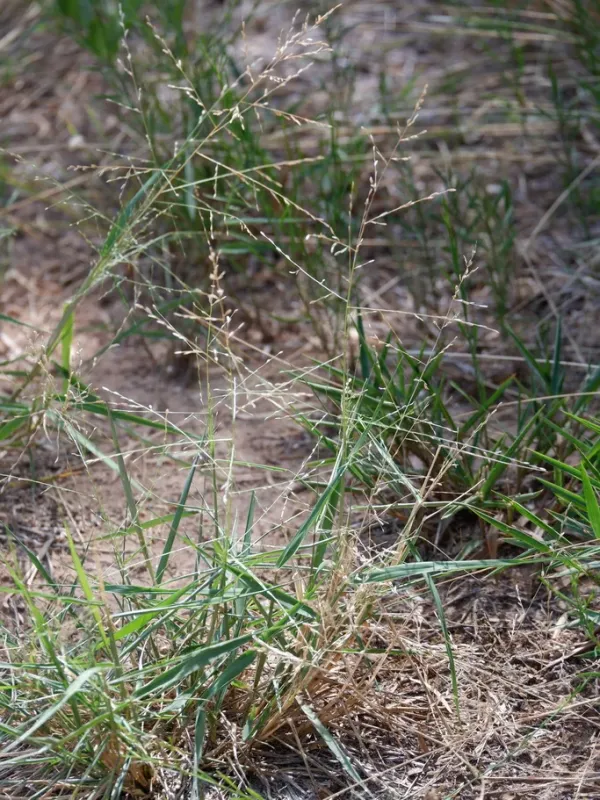
Description
Sowing dates
Silve's lovegrass (Eragrostis silveana) is a perennial grass belonging to the Poaceae family. It is typically sown in the spring once soil temperatures have consistently reached 15 degrees Celsius.
Due to the extremely small size of the seeds, they should be planted at a shallow depth of 1-2 centimeters to ensure successful germination and emergence.
Proper seedbed preparation is vital for this species, as the young seedlings are delicate and require a firm, weed-free soil environment to establish themselves.
In large-scale forage production, row spacing of about 15-20 centimeters is often recommended to allow for initial establishment while optimizing resource competition.
Spring sowing is favored as it allows the root system to develop fully before the onset of summer heat, which is essential for the plant's long-term survival.
Growing requirements
This species is highly recognized for its drought tolerance and its ability to thrive in poor, sandy, or gravelly soils where other grasses often fail to survive.
It performs best in full sunlight and does not tolerate significant shading, which can lead to reduced growth vigor and poor development of the root system.
The plant has low nutrient requirements, making it an excellent candidate for low-input management systems, although nitrogen fertilization can boost biomass.
Soil pH adaptability is another key feature, as it can grow in a variety of soil types ranging from slightly acidic to neutral without showing nutrient deficiency.
Its deep and extensive root system makes it an excellent choice for stabilizing loose soils and preventing erosion in semi-arid and agricultural landscapes.
Yield
In an agricultural context, Silve's lovegrass is primarily utilized as a forage crop for grazing livestock and as a component for hay production in dry areas.
The biomass quality is generally considered high for grazing, and the plant regrows vigorously following grazing pressure or mechanical mowing during the season.
Yield stability is one of its core strengths, providing consistent green matter even during dry spells when traditional pasture grasses significantly decline.
Beyond forage, the plant is valued in land management for its ability to provide cover and support biodiversity in restored grassland environments.
Proper management of the stocking rate is necessary to ensure the stand remains productive over several years without experiencing overgrazing damage.
Main diseases and pests
Silve's lovegrass is naturally hardy and resistant to most common grass pathogens, requiring minimal chemical intervention during its active growth period.
The primary threat to new plantings is weed competition, as slow early growth makes the seedlings susceptible to being outcompeted by aggressive annual weeds.
In very humid conditions, fungal issues related to poor air circulation within the canopy can arise, although this is rare in its native habitat ranges.
Occasional infestations of aphids or specific grass-feeding insects can occur but rarely reach economic injury levels if the plant is well-managed.
Maintaining a healthy stand through proper mowing height and fertility management is the best defense against pests and diseases in agricultural production.
Harvesting
For hay production, the optimal harvest time is at the early heading stage, before the grass starts to shift nutrients from the leaves to the seed heads.
Mowing height should be maintained at least 5-7 centimeters above the ground to ensure that the plant retains enough energy to initiate rapid regrowth.
Drying the harvested material requires efficient equipment, as the fine stems can lose quality if they are exposed to excessive moisture after cutting.
Seed harvesting must be done with precision, as the seeds shatter easily upon maturity, necessitating timely collection to avoid major crop yield loss.
Modern equipment adapted for small-seeded grasses is highly effective for harvesting Silve's lovegrass, ensuring a clean and efficient production process.