
Eragrostis racemosa
Eragrostis racemosa
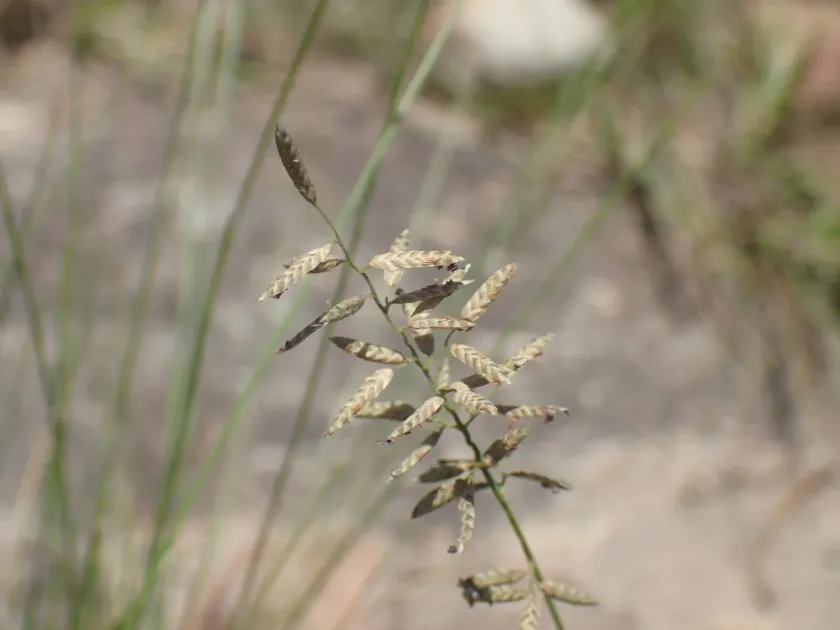
Description
Sowing dates
Eragrostis racemosa, commonly known as a type of lovegrass, belongs to the Poaceae family. It is a perennial grass species often used in pasture rehabilitation and livestock forage systems.
Sowing should ideally occur at the onset of the rainy season to ensure sufficient moisture for seed germination and the establishment of a strong root system.
Seeds are very small, necessitating a shallow sowing depth; pressing the seeds into the soil surface is often more effective than deep burial to ensure success.
Proper seedbed preparation is essential, focusing on a clean, weed-free surface to reduce early competition for the developing seedlings.
Establishing the crop requires patience, as the initial growth phase of the grass can be slow until the perennial root network is fully developed.
Growing requirements
This grass is highly prized for its adaptability, thriving in well-drained sandy or light loamy soils where other forage species might struggle.
Eragrostis racemosa is notably drought-tolerant, making it an excellent candidate for regions experiencing long dry spells during the growing season.
It prefers sunny, open environments and will show reduced biomass production if subjected to heavy shade or competition from taller vegetation.
The plant has moderate nutrient requirements and is capable of maintaining growth in soils that are relatively low in fertility.
While tolerant of various conditions, it performs best when the soil is well-aerated and free from long-term waterlogging, which can cause root damage.
Yield
The primary agricultural use of Eragrostis racemosa is as a grazing forage for cattle, sheep, and other ruminants, providing stable nutrition.
The yield of green biomass depends heavily on management practices; rotational grazing is recommended to maximize sustainable production over the season.
In addition to its forage value, the plant's extensive root system makes it an excellent choice for stabilizing soil on erosion-prone areas.
When harvested for hay, it provides a consistent, high-fiber feed that is suitable for winter supplementation of livestock diets.
High seed yield potential allows farmers to utilize the crop for land restoration and the enrichment of degraded grasslands within their farm systems.
Main diseases and pests
Root rots are the most common issue in poorly drained soils, particularly during seasons with excessive or unseasonable rainfall.
Pests such as aphids and various grass-feeding larvae may cause localized damage to the foliage, especially during early development stages.
Rust diseases can occur if the humidity levels within the dense canopy remain too high for extended periods, reducing the palatability of the grass.
Weed encroachment is a primary threat; if left unchecked, fast-growing weeds can choke out the lovegrass before it establishes its density.
Management of these threats involves monitoring the canopy for disease and ensuring that the pasture is not overgrazed, which weakens the plants.
Harvesting
For hay production, the optimal harvest time is at the early flowering or booting stage to ensure the best balance of protein and fiber content.
When managed as a grazing pasture, maintain a residual height to allow the plant to store enough energy for vigorous regrowth after livestock move on.
Seed harvesting should be performed once the seed heads change color to a matured state, usually late in the summer, followed by immediate cleaning.
Equipment for mechanical harvesting should be set to a height that avoids crown damage, as the plant's growing points are near the base of the stems.
Post-harvest care involves preventing excessive traffic on the field to avoid soil compaction, which could hinder future yields for several seasons.