
New Mexico lovegrass
Eragrostis neomexicana
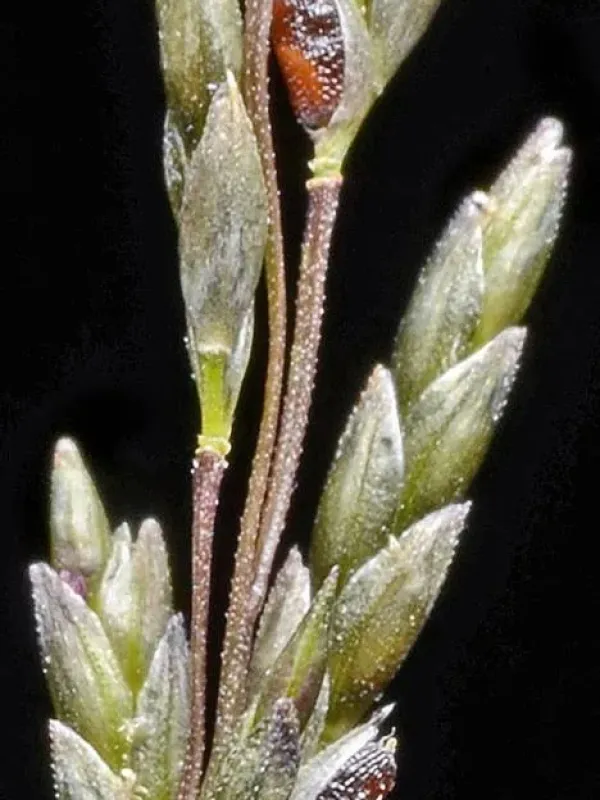
Description
Sowing dates
Sowing of New Mexico lovegrass is best performed in the spring, once the soil has warmed up sufficiently to ensure vigorous germination. It is crucial to avoid planting when there is a risk of late frosts, as seedlings are sensitive to low temperatures during early development.
The seeds of this species are extremely small, necessitating shallow placement in the soil. A seeding depth of no more than a few millimeters is ideal, combined with light rolling to ensure the seeds maintain good contact with the soil for proper moisture uptake.
Establishing an appropriate plant density is critical. Over-seeding can result in excessive competition for sunlight and resources, while under-seeding may allow weeds to take hold during the initial growth stages.
In regions with distinct rainy seasons, seeding should be timed to coincide with the arrival of moisture. This strategy significantly improves the establishment rate and allows young plants to develop strong roots before any subsequent dry spells.
Consistent soil moisture for the first few weeks after sowing is essential for achieving a high germination rate and ensuring that the young grass develops into a robust stand.
Growing requirements
Eragrostis neomexicana, commonly known as New Mexico lovegrass, is a warm-season grass belonging to the Poaceae family. It is exceptionally well-adapted to arid and semi-arid environments, thriving where other forage crops struggle.
The plant prefers well-drained soils, including sandy or rocky textures. It does not tolerate waterlogged conditions or high soil moisture, which can lead to root diseases and stunted growth; therefore, site selection focused on drainage is paramount.
Light exposure is a primary requirement for optimal development. This species requires full sun and does not perform well in shaded areas, where its biomass production and overall vitality are significantly reduced.
While this grass is known for its ability to grow in nutrient-poor soils, it responds positively to balanced fertilization. Nitrogen applications during the early vegetative stage can significantly increase total forage biomass production.
The temperature range optimal for its metabolism is between 20 and 30 degrees Celsius. In these thermal conditions, the grass demonstrates its full potential for rapid regrowth and stress tolerance.
Yield
The yield of New Mexico lovegrass is largely determined by management practices. Under favorable conditions, the grass is highly productive and capable of providing multiple cuttings throughout the growing season.
One of the key biological traits of this species is its rapid recovery after grazing or mowing. This makes it a highly valuable component for managed pastures where quick regrowth is essential for livestock grazing cycles.
For high-quality hay production, harvesting should occur during the late boot stage or early flowering. Delaying the harvest leads to stem lignification, which reduces digestibility and protein content significantly.
Yield stability is a major benefit of this species. Because of its inherent drought resistance, New Mexico lovegrass maintains acceptable forage yields even in years with significantly lower-than-average precipitation.
As a component of grass mixtures, it provides structural integrity and resilience to the pasture, ensuring that the total forage supply remains consistent despite environmental variability.
Main diseases and pests
New Mexico lovegrass is generally considered hardy and possesses high resistance to many common fungal and bacterial diseases that typically plague cool-season forage grasses.
Fungal issues such as leaf spots may arise under conditions of high humidity or poor field ventilation. Good cultural practices, including avoiding high seeding rates, are usually sufficient to prevent these issues without chemical intervention.
Sucking insects, such as aphids and leafhoppers, may occasionally affect the crop during its peak growth period. Regular field monitoring is recommended to determine if insect populations reach economic thresholds.
Weed competition is the greatest threat during the establishment phase. Proper land preparation and the use of post-emergence cultivation methods are recommended to ensure the grass successfully captures the space.
Preventative measures, such as practicing proper crop rotation and ensuring fields are not over-irrigated, represent the most effective strategy for maintaining a healthy and productive stand of this grass.
Harvesting
Harvesting for forage is ideally conducted during the peak flowering stage to achieve the best nutritional balance. During this time, the ratio of leaf mass to stem is optimal, providing high energy and protein for livestock.
The cutting height is a vital agronomic factor. It is recommended to leave at least 5–7 centimeters of stubble. This protects the plant's basal buds and ensures that the grass can recover rapidly for the next cutting cycle.
For seed production, harvesting must be timed carefully to prevent seed shattering. Because the seeds are tiny and easily dispersed by wind, specialized equipment is required to capture them efficiently during the combine process.
Post-harvest management involves drying the forage rapidly to prevent nutrient loss and mold development. Properly cured hay retains its color and nutritional value for extended periods in storage.
Modern harvesting equipment, including windrowers and balers, allows for efficient management of large areas, ensuring that the forage is collected with minimal loss of yield and quality.