
Six-weeks lovegrass
Eragrostis lutescens
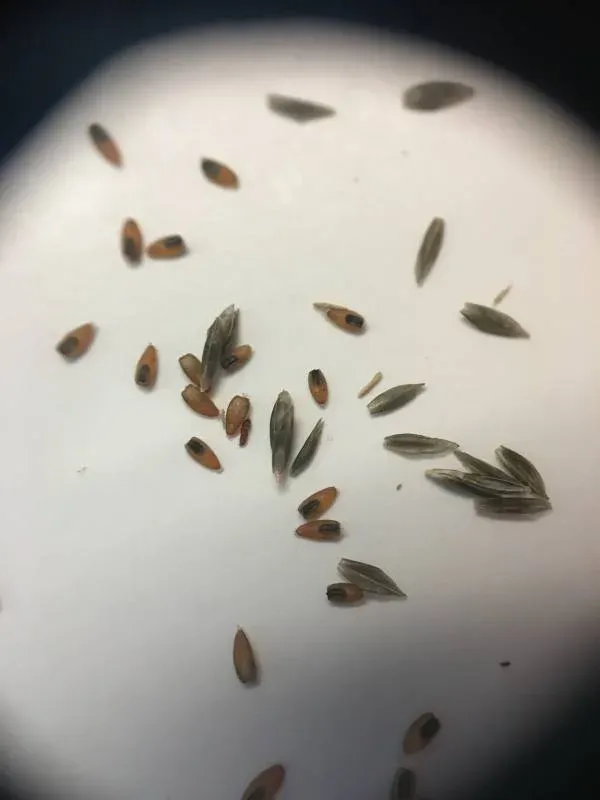
Description
Growing requirements
Six-weeks lovegrass (Eragrostis lutescens) is an annual grass species belonging to the Poaceae family. It is typically found in habitats characterized by sandy, gravelly, or alluvial soils, such as riverbanks and seasonally moist depressions.
The plant thrives in regions with significant solar exposure, requiring high levels of light to complete its rapid life cycle. Its ability to germinate and grow quickly during periods of available moisture is a key adaptation to volatile arid and semi-arid environments.
Morphologically, the grass is defined by its slender, yellowish-green leaves and compressed, yellowish panicles that appear as the plant matures. These characteristics distinguish it from other lovegrass species common to similar geographical zones.
Its root system is well-adapted for stability in loose substrates, contributing to soil conservation in its native habitat. The species shows a distinct preference for open, disturbed areas where competition from taller perennial grasses is relatively low.
While primarily of interest in botanical studies, the species serves as a component of the local flora that provides soil cover and contributes to the overall biodiversity of riparian zones in its North American range.