
Weeping lovegrass
Eragrostis leptostachya
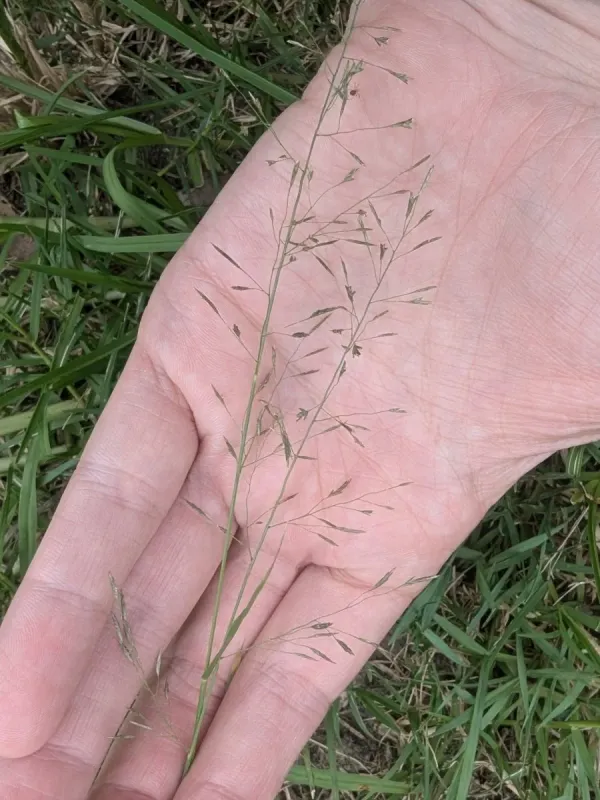
Description
Sowing dates
Planting Eragrostis leptostachya, commonly known as Weeping lovegrass, is best performed during the late spring months when soil temperatures consistently reach 18–22 °C. This species is a warm-season grass that requires warmth for successful germination and early establishment.
Due to the extremely small size of the seeds, they should be sown on the surface or buried at a very shallow depth, not exceeding 1–2 cm. Achieving firm contact between the seed and the soil is essential, so light rolling after seeding is highly recommended to improve moisture retention.
The seeding rate typically ranges from 5 to 8 kg per hectare. It is advisable to use seed drills calibrated for small seeds or to mix the grass seed with an inert material to ensure uniform distribution across the field, preventing gaps in the future stand.
Seedling growth is initially slow, which makes weed management in the first weeks of development critical. Once the grass is established, it forms a dense root system and a thick canopy that effectively competes with most common field weeds, reducing the need for intensive maintenance.
Early-stage irrigation may be necessary if soil moisture levels drop during the germination period. After the plants have reached the tillering stage, the crop becomes significantly more resilient, requiring less supplemental water even during dry spells.
Growing requirements
Weeping lovegrass belongs to the Poaceae family and is recognized for its exceptional adaptability to various environments. It thrives in sunny locations and shows remarkable tolerance to drought, making it an ideal choice for arid and semi-arid regions where other forage grasses often fail.
The plant prefers well-drained soils, including sandy and light loamy types, though it can tolerate a wide variety of soil conditions. It is relatively unfussy regarding soil pH, allowing for success in many landscapes where more sensitive grasses would struggle to survive.
A deep and extensive root system allows the plant to access moisture from significant depths, providing it with a competitive advantage in hot, dry climates. This structural feature ensures the grass remains productive even when atmospheric conditions are harsh for other vegetation.
Nitrogen fertilization is essential for maximizing growth and biomass production. Regular applications of fertilizer following each cutting or grazing cycle will stimulate rapid recovery and maintain high nutrient content in the forage, which is vital for livestock performance.
As a light-loving species, this grass performs best in open areas with full sun exposure. It should not be planted in heavily shaded spots, as lack of sunlight will lead to spindly growth and reduced forage quality, negatively impacting the total biomass yield.
Yield
This grass is widely used for both hay production and grazing purposes. The forage is highly palatable when harvested in the vegetative stage, providing essential nutrients that support the growth and maintenance of beef and dairy cattle throughout the summer months.
Depending on the climatic zone and moisture availability, it is possible to achieve 3–4 cuts per season. Proper management of the regrowth cycle ensures a constant supply of quality forage, which is a key factor in improving the overall efficiency of an agricultural livestock operation.
To ensure high quality, hay should be cut before the plant reaches the full flowering stage. Once the seed heads appear, the stems become tougher and fiber content increases, leading to a significant decrease in the digestibility and overall nutritional value of the hay.
Used as pasture, the grass is highly durable under grazing pressure. However, it is important to implement a rotational grazing system to allow the plants to recover their energy reserves after being eaten, which will help maintain the productivity of the pasture for many years.
Beyond its value as animal feed, Weeping lovegrass is an effective cover crop for soil stabilization. Its deep root system helps hold the soil together, preventing erosion on slopes and improving the organic matter content of the soil over time.
Main diseases and pests
The species generally displays strong natural resistance to major diseases that commonly affect cereal and forage grasses. However, in environments with poor drainage and excessive moisture, root-related pathogens may emerge, emphasizing the importance of site selection.
Common insect pests, including aphids and various grass-feeding larvae, can occasionally affect young stands. In most cases, these issues are minor and can be managed through good agricultural practices or left to natural control by beneficial insects present in the ecosystem.
Weed infestation is the greatest threat during the initial establishment phase. Failure to control competing weeds can result in a thin, low-yielding stand. Farmers are encouraged to use mechanical or cultural methods to clear the site before and during the early weeks of planting.
Maintaining strong, vigorous plants through appropriate soil fertility management is the best defense against pests and diseases. Healthy grass stands are significantly less susceptible to damage, reducing the long-term need for chemical inputs and supporting sustainable farming.
If chemical intervention becomes necessary due to an severe pest outbreak, it is vital to select products that are approved for forage crops and strictly observe safety intervals before grazing or harvesting to ensure the resulting feed is safe for livestock consumption.
Harvesting
Harvesting hay is performed using standard mowing equipment, followed by field curing until moisture levels reach 15–17%. Proper drying is crucial for preventing spoilage and mold during storage, which is essential for maintaining the health of the animals consuming the feed.
When harvesting for seed, the timing is critical. Seed heads should be gathered when they show a mature color but before widespread shattering occurs. Because the seeds are tiny, combine settings must be carefully adjusted to reduce grain loss and maximize the yield.
Harvested seeds must be immediately cleaned and dried to prevent degradation. Proper seed storage in cool, dry conditions ensures that viability remains high for subsequent planting seasons, which is necessary for scaling up the cultivation of this useful grass.
In grazing scenarios, the harvesting is conducted directly by animals. Managers must monitor the residual height of the grass to ensure it does not drop below 5–7 cm, which is necessary for protecting the crown of the plant and supporting rapid regrowth for the next cycle.
Optimizing the harvest schedule based on weather forecasts significantly improves the economic return of the crop. Timely management reduces the risk of crop damage from rain during the curing process and ensures that the maximum amount of high-quality forage is stored for the off-season.