
Eragrostis lacunaria
Eragrostis lacunaria
Description
Growing requirements
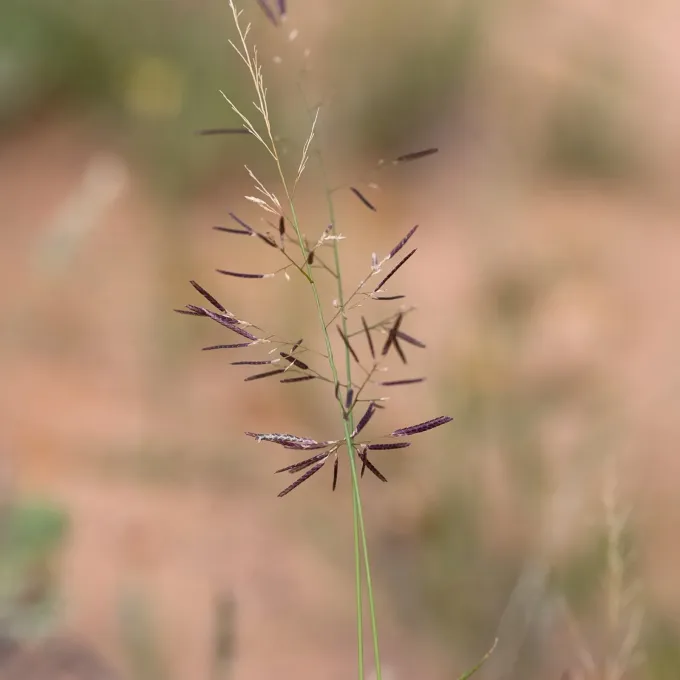
Eragrostis lacunaria is a perennial grass species belonging to the Poaceae family. Native to Australia, this plant is well-adapted to survive in harsh, arid, and semi-arid environments where water availability is consistently low and temperatures can be extreme.
The plant grows as a dense, tufted grass characterized by narrow, sometimes rolled leaves that minimize transpiration. This structural adaptation allows it to thrive in nutrient-poor, sandy soils where many other grass species would fail to establish or maintain growth.
The species requires excellent soil drainage and does not tolerate waterlogging. Optimal growth occurs in full sunlight, making it highly dependent on high solar radiation levels to complete its vegetative and reproductive cycles successfully.
Agronomically, this grass is valued for its resilience under grazing pressure. It has a high recovery rate, allowing it to regenerate effectively after being consumed by livestock, which is a critical trait for sustainable pasture management in arid regions.
While primarily used as natural pasture, its role in stabilizing fragile sandy soils makes it a significant species for land conservation. It maintains soil structure through its extensive root network, preventing wind erosion in exposed environments.