
Japanese lovegrass
Eragrostis japonica
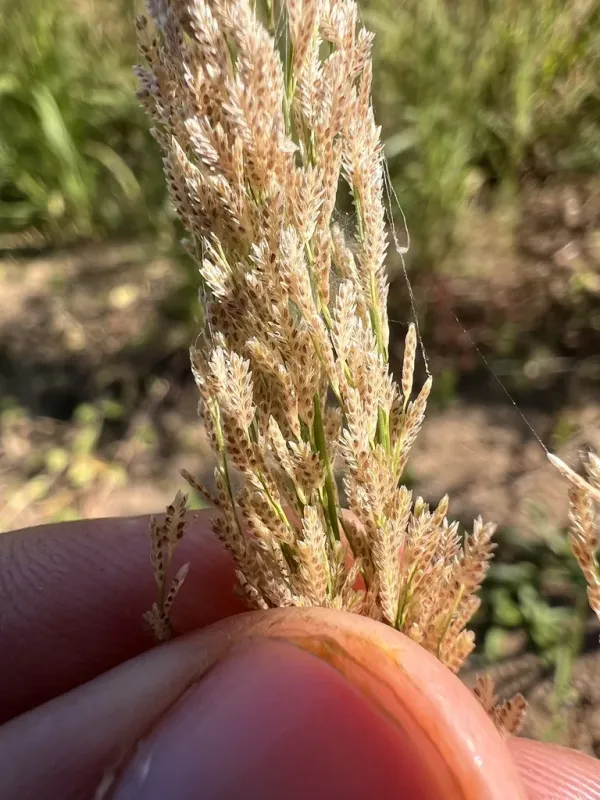
Description
Sowing dates
Sowing should take place in late spring when the soil temperature consistently remains above 15 degrees Celsius. Planting during this period ensures that the grass can establish itself before the onset of extreme summer temperatures.
Seeds should be sown in rows, typically spaced 20 centimeters apart, to allow for optimal air circulation and light penetration. Shallow placement, at a depth of approximately 1 to 2 centimeters, is essential due to the small size of the seeds.
A standard seedbed preparation involves plowing, harrowing, and leveling to create a firm, fine-textured surface. Ensuring good contact between the seed and the soil is vital for achieving high and uniform germination rates.
The seeding rate varies depending on the purpose, usually ranging from 5 to 10 kilograms per hectare. Mechanical drilling is the preferred method to achieve uniform distribution and depth control, which significantly increases establishment success.
Post-sowing rolling is recommended to conserve soil moisture and ensure that the seeds are not displaced by wind or water. If irrigation is available, a light application of water immediately after sowing will hasten the emergence process.
Growing requirements
Japanese lovegrass (Eragrostis japonica) is a species of grass belonging to the Poaceae family. It is an annual or perennial plant that naturally thrives in tropical and temperate regions, known for its rapid growth under favorable environmental conditions.
The plant prefers well-drained soil types, including sandy loams and silty soils. While it exhibits some tolerance to varying soil fertility, it performs best in soils with a neutral pH, which facilitates efficient nutrient uptake for vegetative growth.
Light intensity is a critical factor for the successful development of this species. It is highly photophilous and requires full sun exposure to reach its maximum yield potential; therefore, shaded locations should be avoided for commercial cultivation.
Botanically, Japanese lovegrass is characterized by slender, erect stems and delicate, spreading panicles. Its root system is fibrous and extensive, which not only provides stability but also helps in extracting nutrients from diverse soil depths.
Temperature requirements are moderate to warm. The plant is sensitive to frost, which makes it suitable primarily for spring and summer production cycles. It can withstand short periods of heat, provided there is adequate soil moisture.
Yield
Japanese lovegrass is primarily utilized as a forage crop. It is highly valued for its palatability, especially when harvested at the vegetative stage, providing an excellent source of digestible fiber and minerals for livestock.
Yields can be substantial under favorable management, ranging from 20 to 35 tons of green biomass per hectare. Two or more cuts per season are possible if the crop is managed with regular fertilization and adequate water supply.
The nutritional profile of the grass remains high only until the flowering stage. As the plant transitions to reproduction, the ratio of lignin increases, which reduces the digestibility and overall quality of the forage for ruminants.
Apart from forage, the plant’s deep, fibrous root system makes it an excellent choice for soil erosion control. It is often planted on slopes or light soils to stabilize the surface and improve organic matter content.
Integration of Japanese lovegrass into grazing systems has shown positive results. It recovers quickly after grazing, provided that a rotational grazing scheme is implemented to avoid over-defoliation of the plants.
Main diseases and pests
Fungal diseases, particularly rusts and leaf spots, represent the most significant threat to Japanese lovegrass. These pathogens thrive in humid, stagnant air conditions and can cause severe damage to the leaf tissue if left untreated.
Insect pests such as aphids and various grass-feeding beetles can cause significant feeding damage. These pests not only reduce the vegetative biomass but can also act as vectors for viral diseases that further stress the crop.
Integrated pest management (IPM) is the most effective approach. This includes crop rotation with non-host species, maintenance of clean field borders, and monitoring for early signs of infestation to minimize the need for chemical intervention.
Chemical control should be applied judiciously, following strictly defined safety intervals before grazing or harvesting. The selection of fungicides should be based on local resistance patterns and the specific disease spectrum present.
Proper field hygiene is essential. Removing crop residues after harvest can disrupt the life cycle of many pathogens and overwintering pests, thereby reducing the inoculum pressure for the subsequent growing season.
Harvesting
Harvesting for high-quality hay or silage should occur when the grass reaches the early heading stage. This timing captures the optimal balance between the total dry matter yield and the nutrient content of the plants.
For hay, the grass should be cut and windrowed for rapid drying. Turning the material periodically is necessary to ensure uniform moisture loss and to prevent the development of mold or mycotoxins within the bale.
Seed harvesting requires careful timing, as the seeds shatter easily upon maturity. Combines must be precisely adjusted for airflow and concave clearance to maximize recovery while minimizing the mechanical damage to the seeds.
Post-harvest conditioning includes screening and cleaning to remove chaff and weed seeds. The cleaned seed should be dried to a moisture content of 12% or lower to maintain long-term viability and prevent heating in storage.
Efficient storage in cool, dry, and rodent-proof facilities is mandatory to protect both the forage and the seed stock. Proper management of these stages ensures that the quality and value of the harvested material are preserved.