
Ephedra gerardiana
Ephedra gerardiana
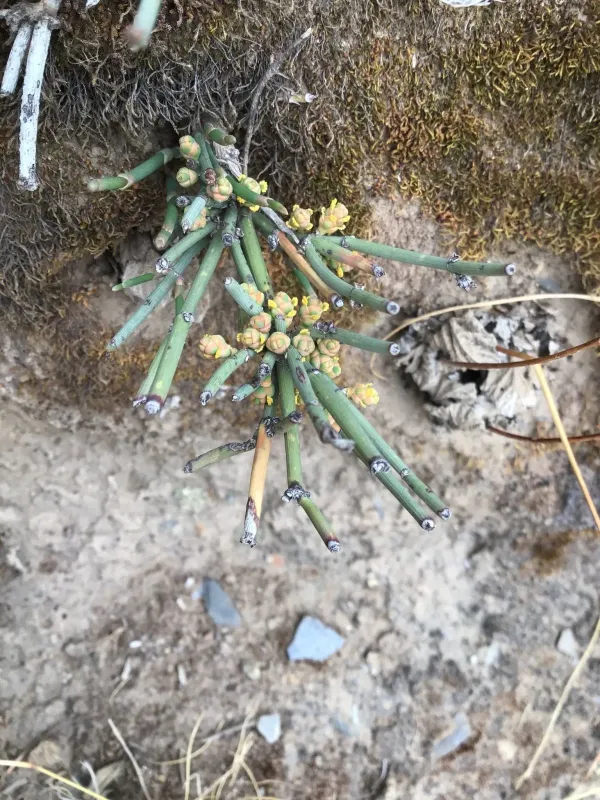
Description
Sowing dates
Ephedra gerardiana is typically propagated from seeds, which require stratification to break dormancy and ensure a uniform germination rate.
Sowing in the nursery beds is recommended during early spring, once the danger of severe frost has passed and soil temperatures begin to rise.
The seeds should be sown in a well-draining substrate, ensuring they are only lightly covered with soil to allow sufficient light penetration.
Seedlings need to be managed with care regarding irrigation, avoiding both waterlogging and excessive desiccation during their early developmental stages.
Transplanting into the field is carried out once the plants have developed a robust root system, typically after the first full growing season.
Growing requirements
This species, belonging to the Ephedraceae family, is native to mountainous regions and is highly adapted to harsh, arid climates.
It thrives in rocky, gravelly soils with excellent drainage, which is critical for maintaining the health of the plant's unique root system.
Sunlight exposure is a major factor; the plant requires full sun to maximize the synthesis of its characteristic alkaloids and ensure vigorous growth.
Ephedra gerardiana exhibits remarkable resilience to drought and extreme temperature variations, making it suitable for high-altitude cultivation.
Low nutrient soil profiles are often sufficient, as the plant has evolved to survive in resource-limited environments typical of its natural habitat.
Yield
The economic yield of Ephedra gerardiana is measured by the biomass of green, non-woody branches collected from established plantations.
Harvesting usually commences after the plants have matured, typically 3 to 4 years after planting, to ensure optimal concentration of active compounds.
Environmental factors, particularly high solar radiation at altitude, contribute to the high quality and potency of the harvested plant material.
Yield management involves selective pruning rather than clear-cutting, which allows the perennial bushes to continue producing for multiple seasons.
Standardized harvesting protocols are essential to maintain the consistency of the chemical profile required by the pharmaceutical industry.
Main diseases and pests
The primary threats to Ephedra gerardiana cultivation include root rot diseases caused by poor drainage or excessive humidity levels in the soil.
Fungal infections can occur if the airflow around the plants is obstructed, necessitating proper spacing during the plantation layout phase.
Various sucking insects may occasionally target young growth, although the plant is generally resistant to many common pests found in agricultural fields.
Weed management is vital in the initial years of establishment to prevent competition for light and nutrients, which can stifle the slow-growing plants.
Adhering to strict agricultural practices helps minimize the need for external chemical inputs, which is critical for maintaining raw material quality.
Harvesting
Harvesting is performed by carefully pruning the fresh, green branches, ensuring the woody stems remain intact for plant regeneration.
Timing the harvest is crucial, as the chemical composition of the plant fluctuates throughout the season based on vegetative activity levels.
Immediately after harvest, the raw material must be transported to a drying facility to prevent degradation due to moisture and microbial activity.
Drying should take place in a controlled environment to preserve the integrity of the alkaloids, avoiding direct sunlight that can cause chemical changes.
Once dried, the product is processed through grinding and standardized testing to verify its compliance with medicinal quality specifications.