
Emex spinosa
Emex spinosa (L.) Campd.
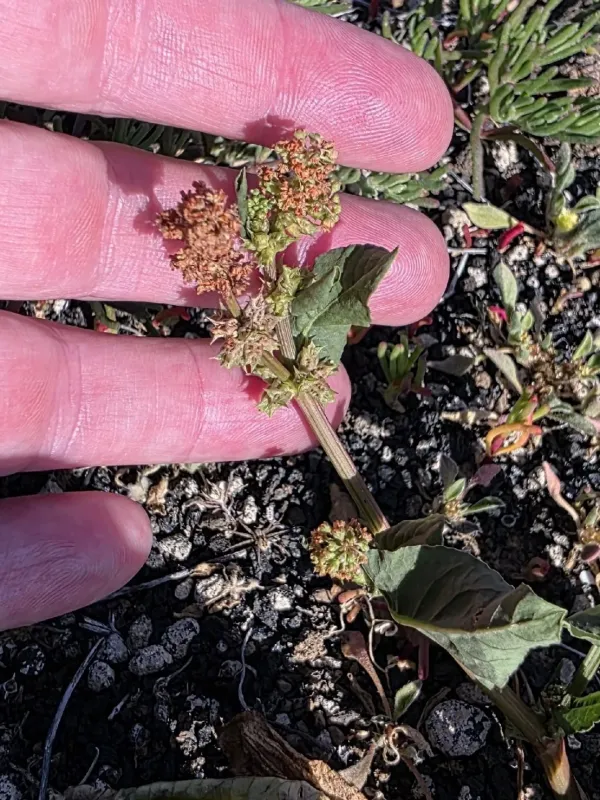
Description
Sowing dates
Emex spinosa is an annual herbaceous plant belonging to the Polygonaceae family. In its natural range, the plant germinates during the cooler, wetter months, establishing itself quickly before the dry season.
The seeds demonstrate high levels of dormancy and longevity within the soil profile. This seed bank ensures that the population can persist even if vegetative growth is controlled for several seasons.
When established under experimental conditions, seeds are planted at a shallow depth of 1–3 centimeters. Rapid germination and early seedling growth are key traits that allow this species to outcompete standard crops.
The species relies on high levels of genetic plasticity to adapt to varying sowing dates. However, the most successful establishment occurs when moisture is readily available during the initial phase.
The entire phenological cycle is relatively short, usually lasting about 100 to 120 days. Once the fruit matures, the plant senesces, and the spiny nuts are dispersed by animals or farm equipment.
Growing requirements
This plant thrives in sandy and light-textured soils. It is notably tolerant of saline conditions, which allows it to colonize habitats that are often unsuitable for conventional agricultural crops.
Full solar exposure is a critical requirement for optimal development. The species does not compete well in areas with high canopy density, making dense crop planting a viable cultural control strategy.
Climate preferences include mild winters and springs with moderate rainfall. The plant avoids the harsh summer heat by completing its life cycle before the onset of the extreme dry, hot season.
Soil nutrient requirements are modest. Emex spinosa effectively utilizes phosphorus and nitrogen even in depleted soils, often out-competing local flora in resource-poor environments.
Moisture requirements are high during the vegetative stage but drop significantly towards maturity. Excessive soil moisture can actually impede its root development by promoting rot at the root collar.
Main diseases and pests
The primary threat posed by Emex spinosa is its status as a highly aggressive invasive weed. It competes directly with winter cereals for water and nutrients, leading to significant yield losses.
The fruit of the plant is equipped with sharp, woody spines. These are a major hazard in agricultural settings, as they cause mechanical injury to the mouths and feet of grazing livestock.
The plant is remarkably resistant to many common fungal and bacterial pathogens. Disease incidence is generally observed only under stagnant water conditions, which the plant usually avoids by site selection.
Few natural pests exert enough pressure to manage the population. Most insects associated with the plant cause only superficial damage to leaves without affecting the seed production capacity.
Management is primarily achieved through systemic herbicides applied at the rosette stage. Once the fruits become woody and spiny, chemical control is largely ineffective, necessitating manual removal and containment.