
Elephantopus scaber
Elephantopus scaber L.
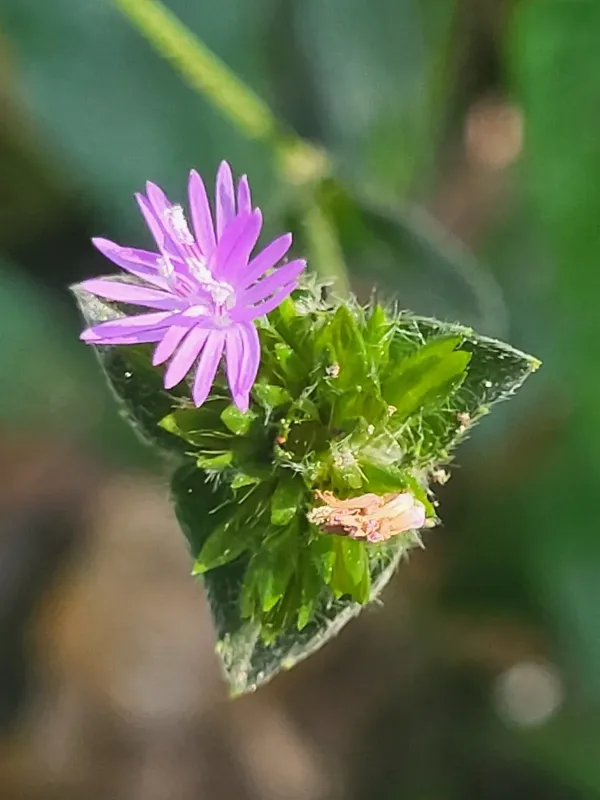
Description
Sowing dates
Elephantopus scaber is a tropical perennial plant; therefore, sowing in temperate regions is possible mainly in greenhouses or when soil temperatures consistently stay above 20 degrees Celsius.
The plant's seeds require preliminary stratification to improve germination energy, as the natural seed coat is quite dense and needs prolonged contact with a moist substrate.
The optimal time for sowing in open ground within the tropical belt is considered the start of the rainy season, which ensures sufficient moisture for seedlings during the initial development stage.
When cultivating in pots or protected ground, it is recommended to sow seeds in a mixture of peat and perlite at a depth of no more than 0.5–1 cm to ensure the light access necessary for successful germination.
It is important to follow the planting scheme: the interval between plants should be at least 30–40 cm, as the basal rosette of the elephant's foot leaves can reach significant sizes, shading neighboring specimens.
Growing requirements
The crop has high requirements for soil quality: it must be loose, well-drained, and have a neutral or slightly acidic pH level.
The plant prefers illuminated areas, but in tropical conditions during midday hours, light shading contributes to better leaf mass development, which is necessary for medicinal raw material.
A key factor for success is regular watering, as this plant is sensitive to the drying of the soil clump, which can lead to stunted growth and early transition to the flowering phase.
For intensive growth, it is recommended to apply organic fertilizers, such as decomposed compost, which not only nourishes the plant but also improves the soil structure.
The temperature regime should be maintained in the range of +22 to +30 degrees; the crop is extremely sensitive to frost and sharp temperature fluctuations, which can cause the death of the root system.
Yield
The economic value of the plant lies in harvesting the aerial parts (leaves and stems) and the roots, which are collected once the plant reaches full maturity.
In industrial conditions, the yield of dry medicinal raw material varies depending on the agro-background and planting density, averaging several tons per hectare with proper care.
The root system, which possesses pronounced pharmacological properties, accounts for up to 30% of the total plant biomass when collected at the end of the vegetation period.
To maximize product yield, it is common practice to remove early flower stalks, allowing the plant to redistribute resources to the development of vegetative organs and the accumulation of biologically active substances.
Drying of the collected material is carried out in well-ventilated rooms at temperatures not exceeding 45 degrees to preserve the quality of essential oils and flavonoids.
Main diseases and pests
Elephantopus scaber is relatively resistant to most pathogens, but under conditions of excessive humidity, it is susceptible to fungal infections such as powdery mildew.
The main pests for young seedlings are slugs and snails, which can completely destroy young leaves during their active growth period.
In greenhouse conditions, the crop can be damaged by aphids or spider mites, which require the use of biological insecticides or soap solutions for control.
Root rot, caused by stagnant water in the soil, is the most serious threat, making proper drainage a mandatory preventive condition.
- Regular soil loosening to prevent moisture stagnation.
- Removal of weeds that create shade and promote fungal growth.
- Monitoring of the leaf surface for pest presence.
Harvesting
Harvesting begins when the plant reaches the pre-flowering phase, as this is when the concentration of active substances in the aerial parts is at its peak.
Leaves are cut by hand, taking care not to damage the central growing point, which allows the plant to regrow new foliage for a subsequent harvest during the season.
Roots are harvested once per cultivation cycle, usually at the end of the season when the aerial part begins to naturally turn yellow and wither.
The collected plant parts are subjected to immediate cleaning from soil particles and sorting to prevent rotten or damaged fragments from entering the bulk mass.
After collection, the raw material undergoes primary processing: washing (for roots) and spreading in thin layers on shelves to avoid self-heating and spoilage of the crop.