
Ehrharta villosa
Ehrharta villosa
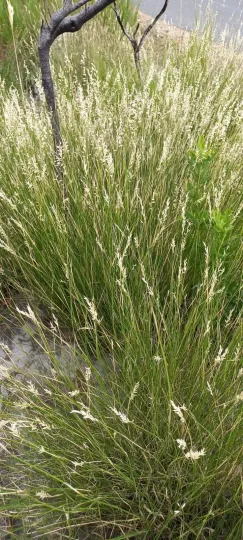
Description
Sowing dates
Sowing Ehrharta villosa is typically performed during the onset of the rainy season to ensure moisture availability for optimal seed germination.
The seeds should be sown at a shallow depth, as the small size of the seeds requires direct contact with the surface soil to facilitate rapid sprout emergence.
Using broadcast seeding methods on prepared soil surfaces often yields the best results for establishing protective ground cover in sandy regions.
It is essential to avoid extreme weather windows, specifically during the peak of summer, to prevent the desiccation of young seedlings in high-heat environments.
Proper seedbed preparation, including light harrowing to remove competitive debris, significantly increases the likelihood of successful stand establishment.
Growing requirements
Ehrharta villosa is a perennial member of the Poaceae family, specifically adapted to thrive in harsh, nutrient-poor, and highly unstable sandy environments.
The plant exhibits exceptional drought tolerance, utilizing a deep and fibrous root system that effectively anchors shifting soil particles.
It prefers full sun exposure to maintain high photosynthetic activity, which is crucial for the plant's structural development and long-term survival.
It thrives in soils with low nitrogen levels and minimal organic matter, outperforming many other traditional forage crops in infertile settings.
A mild temperate climate with moderate precipitation patterns provides the most favorable conditions for the vigorous vegetative growth of this species.
Main diseases and pests
Overgrazing remains the primary threat to the stability of Ehrharta villosa stands, as it leads to soil compaction and the destruction of root biomass.
While the species is naturally hardy, localized fungal issues may arise in areas with poor drainage and excessive stagnant moisture.
Pest pressures are generally low; however, agricultural monitoring is recommended to ensure that localized insect outbreaks do not impact seed viability.
The encroachment of non-native, highly competitive invasive weeds poses a persistent threat to the purity and success of established stands.
Human interference, including uncontrolled vehicular traffic, is a major cause of mechanical damage to the delicate root structures of the grass.
Harvesting
The primary utility of Ehrharta villosa is environmental stabilization, meaning that harvest activities must be balanced with the need for ongoing soil protection.
If utilized for forage, rotational grazing is strictly recommended to allow for root recovery and prevent the degradation of the grassland community.
Seed harvesting should be performed during the peak of maturity, utilizing combine harvesters adapted for light, small-seeded grass varieties.
Strategic management of biomass extraction ensures that enough cover remains to prevent wind-driven erosion during vulnerable off-season months.
Sustainable harvesting practices help to regenerate the soil health, ensuring the long-term productivity and viability of the cultivated area.