
Pachyveria Lilacina
Echeveria lilacina x Pachyphytum oviferum
Description
Growing requirements
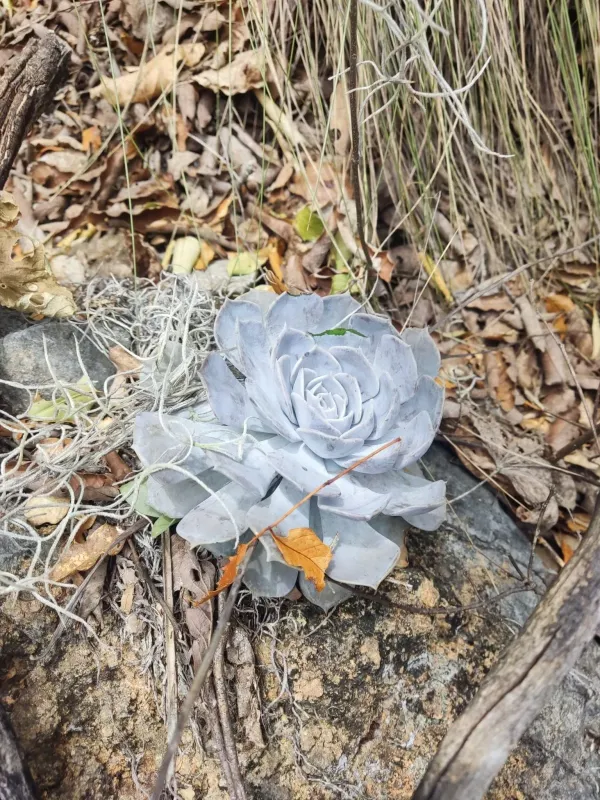
Pachyveria Lilacina is an intergeneric hybrid within the Crassulaceae family, created by crossing Echeveria lilacina and Pachyphytum oviferum. This plant features a tight, rosette-forming structure with thick, glaucous, lilac-tinted leaves that store water efficiently.
Cultivation requires intense, bright light to maintain the plant's characteristic compact habit. Without adequate sunlight, the plant will become etiolated, losing its structural integrity and distinct aesthetic appeal.
The substrate must be highly porous and well-draining, similar to that used for alpine plants or cacti. A mix containing coarse sand, pumice, or perlite is essential to ensure that roots are not sitting in stagnant moisture.
Watering intervals should follow the soak-and-dry method, ensuring the soil is completely dry before adding more water. During the winter months, when the plant enters a state of dormancy, irrigation frequency should be drastically reduced.
Proper airflow is critical for the health of this succulent. Good ventilation helps prevent humidity buildup in the leaf rosettes, which is a common cause of tissue degradation in thick-leaved desert species.
Main diseases and pests
Root rot is the most significant threat to Pachyveria Lilacina, typically caused by overwatering or soil that retains moisture for too long. Signs include blackened bases and leaves that fall off with the slightest touch.
Mealybugs are common pests that colonize the dense leaf rosettes, feeding on the plant's sap. They often leave a white, cottony residue that is clearly visible to the grower during regular plant inspections.
Spider mites can also be a challenge, particularly in indoor environments with low humidity. Their feeding habits cause chlorosis and tiny pinprick marks on the leaves, which can severely damage the plant's appearance.
Effective management of these threats involves routine observation and the use of targeted pest control measures. Ensuring the environment is not too humid and keeping the foliage clean are essential preventative actions.
In cases of severe infestation or rot, pruning damaged parts is necessary to stop the spread of infection. Using appropriate systemic pesticides or fungicides can help restore the plant to a healthy state after an outbreak.