
Ecdeiocolea monostachya
Ecdeiocolea monostachya
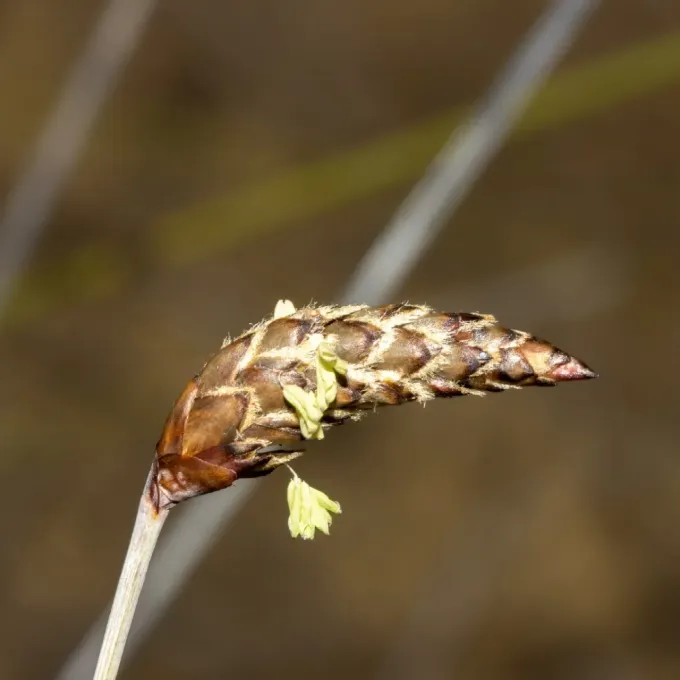
Description
Growing requirements
Ecdeiocolea monostachya is a distinctive perennial plant belonging to the Ecdeiocoleaceae family, native exclusively to the southwest region of Western Australia. This species is highly specialized, having evolved to thrive in the nutrient-poor, sandy soils characteristic of its endemic habitat.
The plant exhibits remarkable physiological adaptations to arid conditions, which are critical for its survival in the Mediterranean climate of Western Australia. It typically grows in clumps, which helps to mitigate the loss of soil moisture and provides a micro-habitat for root development under intense sun exposure.
Botanically, the species is defined by its slender, erect stems and specific reproductive structures that place it within the order Poales. Its resilience to drought and heat makes it a subject of interest for plant biologists studying the evolution of monocots in isolated environments.
Environmental requirements include well-drained soil and a climate characterized by distinct wet winters and prolonged, hot, dry summers. The species is highly sensitive to waterlogging, necessitating specific topographical placement to ensure sufficient drainage and continuous solar access throughout the growing cycle.
Regarding agricultural or economic use, Ecdeiocolea monostachya is currently studied for its potential in ecological restoration and the stabilization of degraded soils in arid regions. While not currently a staple agricultural crop, its ability to thrive in challenging environments offers potential for land rehabilitation projects.