
Dymondia
Dymondia margaretae
Description
Growing requirements
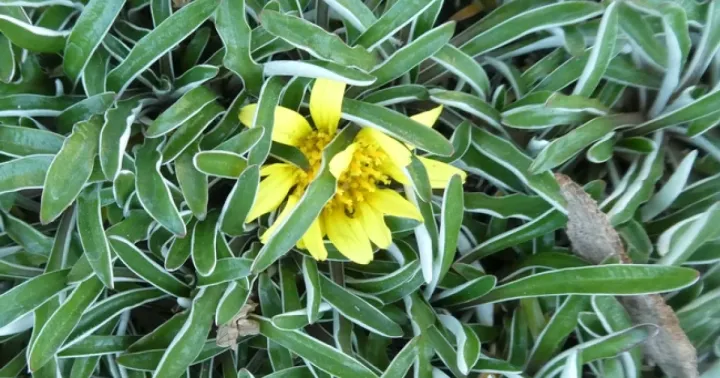
Dymondia (Dymondia margaretae) is a prostrate perennial herb belonging to the Asteraceae family. Known for its distinct silver-green foliage, it forms a dense, mat-like groundcover that is highly valued in xeriscaping and sustainable landscape architecture.
Native to the Cape Province of South Africa, this species is well-adapted to coastal conditions. It flourishes in environments that mimic its natural habitat, which typically consists of sunny, well-drained, sandy terrain near the sea.
The plant requires full sun for optimal performance. While it is known for its ability to handle foot traffic, providing it with well-aerated, gritty, or sandy soil is essential to prevent root asphyxiation and maintain its tight growth habit.
Dymondia is highly drought-tolerant once established. Its low water requirements make it an excellent choice for regions with limited rainfall or where water conservation is a priority in municipal and residential landscape management.
Temperature tolerance ranges from mild frost to high heat. However, it is not considered fully hardy in extreme cold climates and should be managed as a seasonal element if winter temperatures drop significantly below freezing.
Main diseases and pests
Overwatering is the primary cause of plant loss for Dymondia. It is extremely sensitive to waterlogged conditions, which facilitate the development of root rot pathogens. Proper site drainage is mandatory for successful long-term cultivation.
Powdery mildew can become an issue in regions with high humidity or poor air circulation. To manage this, ensure that plantings are not overcrowded and that the surrounding area is free of debris that might trap moisture near the foliage.
Pests such as mealybugs and spider mites may occasionally infest the plant, particularly if it is stressed by improper irrigation or poor light conditions. Early detection and treatment with insecticidal soaps can mitigate these problems.
Slugs and snails can cause significant damage to young transplants. Protecting new plantings with physical barriers or organic molluscicides is recommended during the first few weeks until the groundcover is fully established.
Weed management is critical during the establishment phase. Because Dymondia has a slow-to-moderate growth rate in its early stages, competitive weeds must be hand-pulled to ensure the plant can spread and eventually crowd out invasive species.