
Salicornia bigelovii
Salicornia bigelovii Torr.
Description
Sowing dates
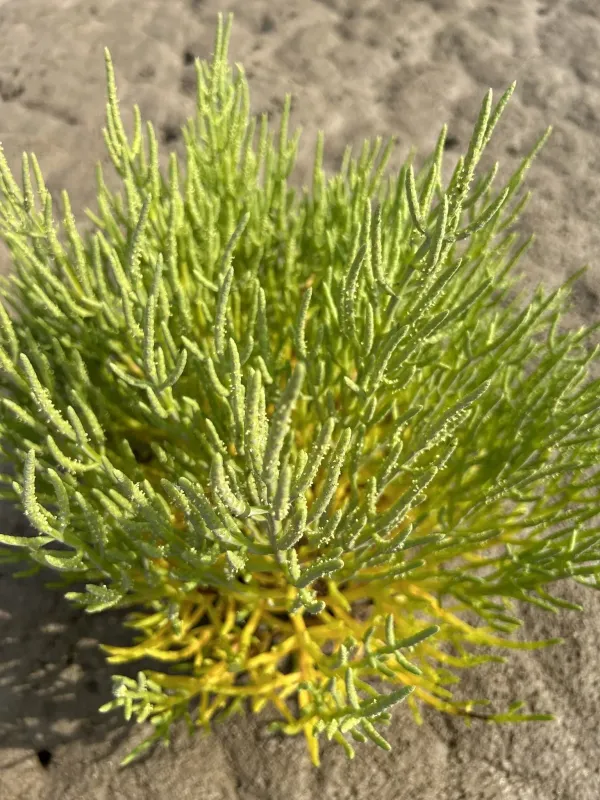
Salicornia bigelovii is an annual halophyte belonging to the Amaranthaceae family. It is a highly specialized plant species capable of thriving in environments with extreme soil salinity, making it a key candidate for seawater-based agriculture.
Sowing typically takes place in the spring when soil temperatures reach levels sufficient to ensure uniform germination. Consistent moisture levels are crucial during the seedling establishment phase for optimal crop density.
The planting process involves row-seeding using specialized equipment suitable for small seeds. Given its salt-tolerance, the crop can be cultivated on marginal coastal lands that are unsuitable for traditional food crops.
The plant has adapted to its environment by evolving succulent stems that store moisture efficiently. This trait allows the crop to withstand temporary freshwater deficits by utilizing diluted saline water or seawater.
Maintaining the correct plant density is essential for maximizing yield. Adjustments to seeding rates should be made based on the local soil salinity levels and the availability of nutrient inputs.
Growing requirements
Salicornia bigelovii requires significant sun exposure and warm temperatures to complete its lifecycle effectively. It is best suited for cultivation in subtropical and tropical regions with favorable weather patterns.
Soil requirements focus on adequate drainage. Although the plant is a halophyte, it requires well-aerated soil to prevent root decay, especially during periods of high temperature and high humidity.
Nitrogen fertilization is a critical component of the agronomic management plan. High saline concentrations in the soil can interfere with nutrient uptake, necessitating strategic nitrogen application to boost biomass.
Irrigation with brackish or seawater is essential. This practice provides the necessary moisture and sustains the salt-enriched conditions that the plant requires to maintain its biological processes.
Monitoring the quality of irrigation water is vital. While the crop can tolerate extreme salinity, an uncontrolled influx of specific ion imbalances may impede photosynthetic efficiency and general growth.
Yield
The primary economic value of Salicornia bigelovii comes from its seeds, which contain up to 30% high-quality vegetable oil. This makes the plant a viable source of raw material for the bioenergy sector.
The plant's biomass also serves as a high-mineral fodder for livestock. When properly processed and balanced in a diet, it provides valuable nutrients for ruminants, especially in coastal areas.
The oil extracted from the seeds shares characteristics with sunflower oil, making it suitable for both food industry applications and the production of second-generation biodiesel.
High biomass yields not only provide economic returns but also assist in land restoration. By extracting minerals and salts from the soil, the crop acts as a natural agent for soil rehabilitation.
Profitability is highly dependent on effective logistics for harvesting and processing. As the technology matures, Salicornia bigelovii is becoming an increasingly attractive investment for saline-land agriculture.
Main diseases and pests
Fungal diseases are the primary threats to the crop, especially under conditions of poor ventilation or excess humidity. Proper field management and spacing are the best preventive strategies.
Various insect pests can damage succulent tissues if left unchecked. Regular field scouting is necessary to identify and mitigate pest infestations before they reach economic damage thresholds.
Soil pH imbalances can occur if fertilization is not managed properly alongside irrigation. Routine soil testing is required to keep the growing environment within the optimal range for the plant.
Weed competition can reduce yield by competing for light and space during early growth. Mechanical weed control or targeted application of herbicides may be employed to protect the crop.
Severe weather events, including heavy storms or prolonged flooding, can cause physical damage to the stems. While the plant is adapted to salty environments, extreme mechanical impact can be harmful.
Harvesting
Harvesting is performed once the seeds reach physiological maturity and the plant tissue begins to dry out. Timing is critical to prevent seed shattering and minimize post-harvest losses.
Combines equipped with precision settings for small seeds are used to harvest the crop. Careful calibration of the threshing unit is required to ensure seed integrity and maximize recovery rates.
After collection, seeds must be dried immediately to a safe moisture content. This step is vital to prevent mold growth and maintain the chemical stability of the extracted oils during storage.
The remaining biomass is collected for use as livestock feed or as a feedstock for bioenergy production. This creates a circular production system that maximizes resource utilization.
Storage conditions for harvested seeds should be cool and dry. Adhering to these storage parameters ensures that the oil quality and germinability remain at an optimal level for long-term supply.