
Harungana madagascariensis
Harungana madagascariensis Lam. ex Poir.
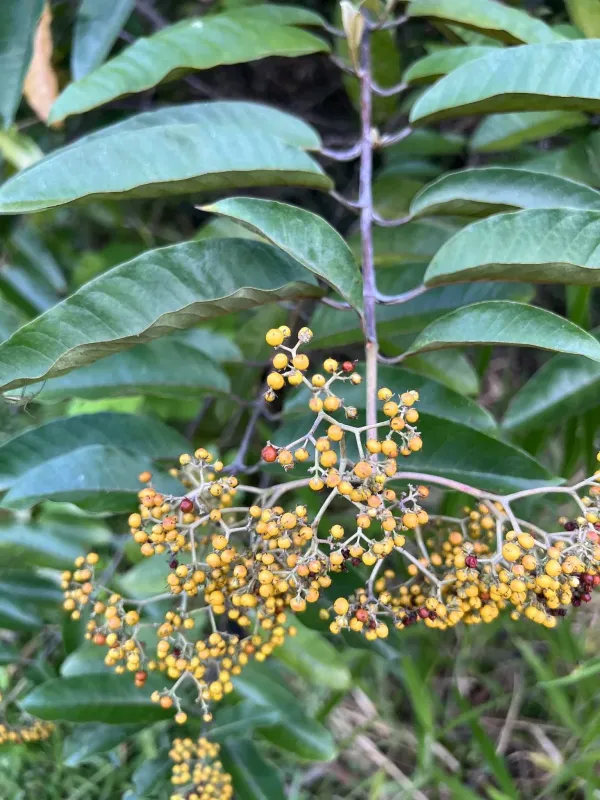
Description
Growing requirements
Harungana madagascariensis is an evergreen tree or shrub belonging to the Hypericaceae family. It is known for its rapid growth rate and its ecological role as a pioneer species in tropical habitats.
The native range of the species covers tropical Africa and Madagascar. The plant thrives in humid forest environments and disturbed secondary forests, where it rapidly colonizes open clearings.
Optimal growth requires a tropical climate characterized by consistently high temperatures and abundant rainfall throughout the year. The species is highly sensitive to frost and lacks cold tolerance, restricting it to tropical latitudes.
It adapts well to various soil types, including acidic and nutrient-poor soils. This makes it an excellent candidate for the rehabilitation of degraded land and improving soil quality in tropical regions.
The plant is highly heliophilic and requires full sun exposure to maintain vigorous growth. In shaded environments, the tree tends to develop a thinner crown and significantly reduced overall biomass production.
Yield
The primary economic value of Harungana madagascariensis lies in its medicinal properties. Traditional medicine utilizes the bark, leaves, and yellow latex to treat skin ailments, digestive disorders, and bacterial infections.
The wood of the tree is valued for local construction and fuel. Due to its straight growth habit, it is often utilized to make tool handles and small-scale structural materials in rural settings.
In terms of agricultural and environmental value, the tree acts as a crucial agent for soil stabilization. Its fast growth covers exposed soil quickly, preventing surface erosion during heavy tropical rains.
The fruits serve as an essential food source for wildlife, particularly tropical birds and primates. This interaction facilitates the dispersal of seeds, ensuring the continued survival of the species in the wild.
Ongoing pharmacological research highlights the presence of antimicrobial and antifungal compounds in the plant. This potential has sparked interest in controlled cultivation for the pharmaceutical industry.
Main diseases and pests
Root rot caused by waterlogging is a primary concern for the health of Harungana plantations. Proper site selection and drainage management are essential to prevent fungal proliferation in the rhizosphere.
Leaf-eating insects can cause significant damage to young plantations during the early stages of development. Regular scouting is recommended to prevent severe defoliation and stunted growth.
Sucking insects, such as aphids, can weaken the plant and lead to the development of sooty mold on the foliage. This interferes with photosynthesis and reduces the overall vigor of the individual tree.
Damage to the bark from tools or environmental factors can serve as an entry point for secondary infections. Maintaining orchard hygiene is crucial for preventing the spread of diseases among dense stands.
Cultural practices such as thinning and pruning are necessary to improve air circulation within the canopy. This reduces humidity levels around the foliage, making the plant less susceptible to fungal leaf pathogens.