
Yellow whitlow-grass
Draba aizoides L.
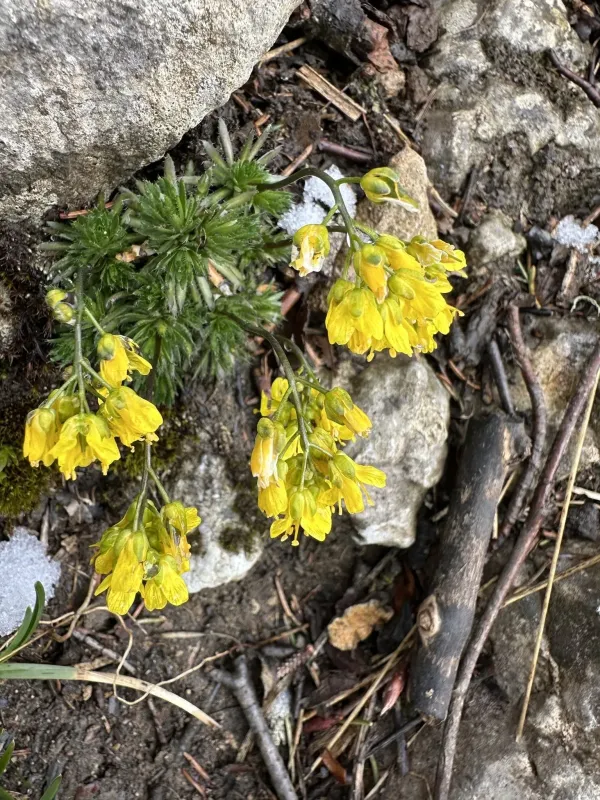
Description
Sowing dates
The yellow whitlow-grass is typically propagated via seeds, which perform best when sown during the autumn season. This allows for natural cold stratification during the winter months.
For spring sowing, seeds require pre-chilling in a refrigerator for at least one month to break dormancy. Once prepared, sow them thinly on the surface of a well-drained medium.
Since the seeds are extremely small, they should be covered only lightly with coarse sand or fine grit. Keeping the sowing medium consistently damp is essential for successful germination.
Seedlings should be thinned out or transplanted once they develop at least two true leaves. Maintaining proper spacing is crucial to prevent fungal issues among the dense rosettes.
Vegetative propagation via clump division can also be performed immediately after the flowering period to maintain the vigor of the parent plant.
Growing requirements
Draba aizoides belongs to the Brassicaceae family and is an alpine perennial, naturally adapted to rocky crevices and mountain slopes in high-altitude environments.
To thrive, this species requires a full sun exposure. It is sensitive to shade, which often causes the plants to lose their characteristic tight, compact growth habit.
The soil must be alkaline, gritty, and exceptionally well-drained. Heavy or waterlogged soils are unsuitable and will likely lead to the rapid decline of the plant.
The plant is highly tolerant of drought and cold, making it an excellent candidate for specialized rock gardens, scree beds, or alpine containers.
Fertilization should be kept to an absolute minimum, as excess nutrients encourage leggy growth and reduce the plant's natural resistance to environmental stress.
Main diseases and pests
Root rot is the most common threat to this plant, usually caused by poor drainage or persistent water accumulation around the crown of the rosette.
Fungal infections, such as powdery mildew, may occur during seasons with high humidity and stagnant air. Proper spacing and airflow are the best preventative measures.
Flea beetles are common pests that feed on the foliage of plants in the Brassicaceae family. Monitoring in early spring is essential for timely control.
Slugs and snails can pose a significant danger to emerging growth. Using protective barriers or traps is recommended to ensure plant safety in damp conditions.
Aggressive weed encroachment can easily smother this slow-growing perennial, so consistent manual weeding is necessary to maintain a healthy environment.