
Doum palm
Hyphaene coriacea Gaertn.
Description
Growing requirements
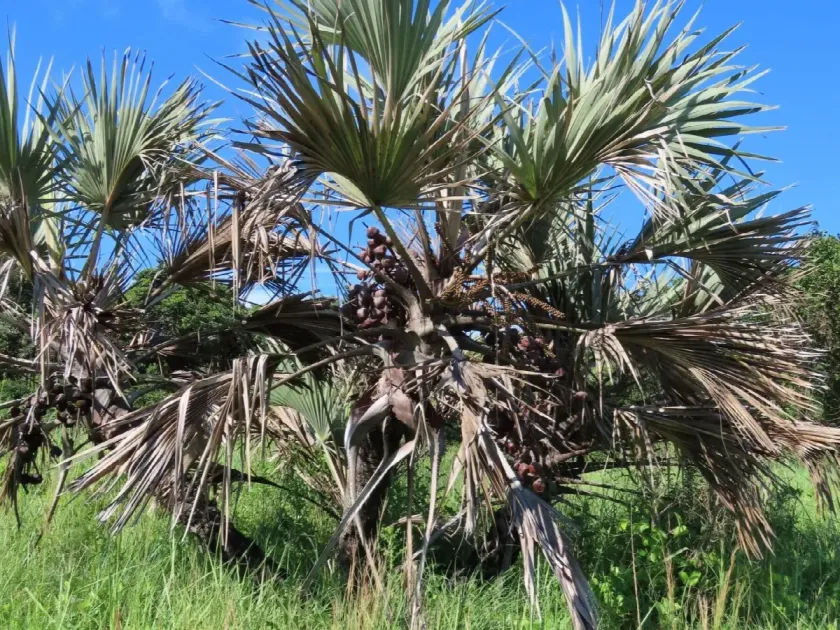
The Doum palm (Hyphaene coriacea) is a distinctive species within the Arecaceae family. It is native to Eastern Africa, where it thrives in coastal habitats and dry savannas. One of its most notable botanical features is the dichotomous branching of its stem, a rarity among palm trees.
This crop requires full sun exposure for optimal growth and development. Being adapted to tropical environments, it demonstrates high resilience to heat and occasional dry spells. In cultivated settings, it needs consistent warmth, as it is highly sensitive to cold and cannot survive any frost.
Soil preferences lean towards sandy or well-drained loam. While the Doum palm is salt-tolerant, which makes it suitable for coastal agricultural plots, it strictly requires efficient drainage. Waterlogged soil conditions can lead to root rot and other physiological stressors, hindering the plant's growth.
Climate conditions must remain within the tropical range. Growth is most vigorous when mean temperatures stay above 20 degrees Celsius. In areas with high atmospheric humidity or seasonal rainfall, the palm establishes a deep and resilient root system that ensures its long-term stability.
Agricultural management is relatively low-intensity, focusing primarily on spacing and protection against initial competition. Because the species grows slowly, young plants require careful monitoring for pests and weed suppression to ensure they successfully transition to their adult, more robust stage.
Harvesting
The harvest of the Doum palm primarily focuses on its nutritious fruits and durable leaves. The fruit, often described as having a gingerbread-like taste, is gathered once it turns a mature brown color. This harvest is typically labor-intensive as it involves manual collection from the tree crown.
Processing the fruit includes drying and grinding the flesh into flour, which is a staple food source for local communities. The seeds, having a very hard endosperm, are also collected for various purposes, including their transformation into artisanal products and jewelry.
Leaves are harvested systematically by cutting mature foliage. This practice is sustainable, provided that the growing point of the palm remains untouched. The fibers obtained from the leaves are highly valued for their strength, durability, and resistance to environmental degradation.
Post-harvest processing involves sun-drying the leaves, which makes the fibers flexible and suitable for weaving. This resource supports local craftsmanship, providing materials for baskets, mats, and various types of cordage used in traditional agriculture and domestic life.
Economic utility extends to the seed coat and pulp remnants. These components are occasionally utilized in feed production or as organic mulch for nursery operations. The multipurpose nature of the plant makes it a vital species for maintaining agricultural biodiversity in arid tropical regions.