
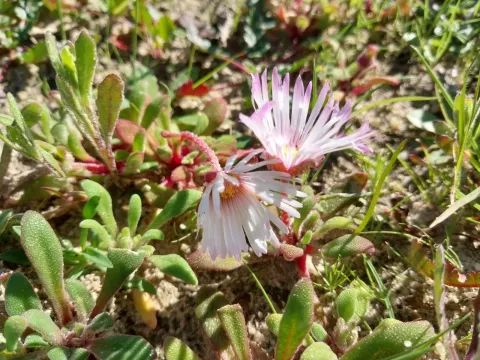
Dorotheanthus
Dorotheanthus
Seeds of Dorotheanthus are sown indoors in late March or early April, as the plant has a long vegetation period before it starts to bloom. Because the seeds are extremely tiny, they are distributed over the surface of a moist substrate without being covered, and then kept under glass or plastic to create a greenhouse effect.
What the section contains

Dorotheanthus
The temperature during germination should be maintained between 20-22 degrees Celsius. It is essential to provide sufficient lighting from the moment sprouts appear to prevent legginess, which would significantly hinder the healthy development of the plants.
Seedlings are pricked out when the first two true leaves appear, using individual pots or propagation trays. They should only be transplanted outdoors once the risk of night frost has passed, usually in the second half of May.
If sowing directly into open ground, one must wait for the soil to warm up thoroughly, which typically corresponds to the end of May. The site must be very sunny, as the plant requires direct sunlight to properly form its vibrant, daisy-like flowers.
Spacing between plants should be at least 15-20 centimeters. This distance is necessary to ensure good air circulation and to prevent water stagnation, which Dorotheanthus cannot tolerate due to its succulent nature.
Dorotheanthus is a low-growing herbaceous plant belonging to the Aizoaceae family, commonly cultivated as an annual in gardens. Native to South Africa, it is highly adapted to intense sunlight and thrives in arid, harsh environments.
The primary soil requirement is excellent drainage. The plant is extremely susceptible to root rot, so it performs best in light, sandy, or gritty soils with a neutral or slightly acidic pH level.
Climatic conditions for Dorotheanthus are demanding: it is frost-tender and struggles in high humidity. Even a minor dip below freezing is lethal, while excessive rain or high soil moisture often triggers fungal decay of the stems.
It is a strictly light-loving succulent; its blooms are known for opening only under bright sunlight. In cloudy or overcast conditions, the buds remain closed, which limits the visual impact of the display in cooler or wetter climates.
Maintenance during the growing season is minimal, limited primarily to rare watering during extreme heatwaves. The plant is highly adaptable to nutrient-poor soils, meaning that excessive fertilization is unnecessary and potentially harmful to the plant's health.
The main threat to Dorotheanthus is excessive soil moisture, which causes root rot and various fungal infections. Symptoms include darkening of the succulent stems and sudden wilting of the plant, at which point it is usually too late to save it.
Among pests, spider mites pose the greatest danger, particularly during hot and dry spells. If spider mite infestation is detected, it is necessary to apply acaricidal insecticides immediately to prevent the colony from spreading.
Aphids can also cause damage by sucking sap from tender new shoots, leading to stunted growth and leaf curling. Regular inspection of the plants and the use of appropriate biological or chemical controls are recommended for effective management.
Slugs and snails are major hazards in damp garden spots and can completely decimate young Dorotheanthus plantings. To minimize risks, gardeners should avoid overcrowding and keep the surrounding areas free of weeds and debris.
Disease prevention is primarily based on following proper agricultural practices: selecting high-sunlight locations, strictly limiting irrigation, and ensuring that all containers or garden beds have superior drainage capacity.