
Donatia fascicularis
Donatia fascicularis
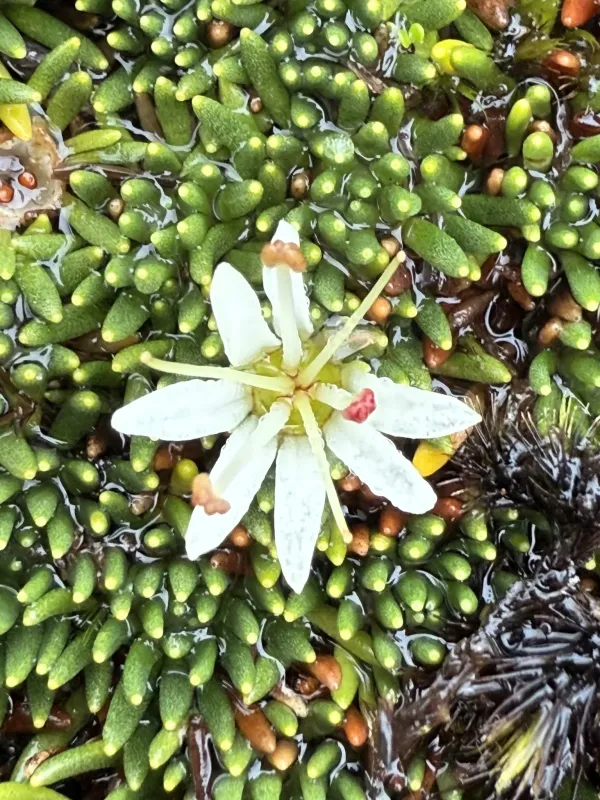
Description
Growing requirements
Donatia fascicularis is a perennial evergreen plant belonging to the family Donatiaceae. It is well-known for its compact, cushion-forming habit, which serves as a highly efficient adaptation mechanism to survive in extreme alpine and subantarctic environments.
The native range of this species spans the southern regions of South America, particularly Patagonia (Chile and Argentina), as well as various subantarctic islands. It is typically found in high-altitude boggy areas, rocky slopes, and exposed meadows where few other plants can establish.
Botanically, the species is distinguished by its dense cluster of small, needle-like leaves. This growth form protects the inner parts of the plant from freezing winds and heavy precipitation, ensuring that the plant maintains its structural integrity throughout the seasons.
Cultivation requirements for Donatia fascicularis are demanding and strictly defined by its natural habitat. It requires acidic, well-drained, nutrient-poor soil and high humidity. Proper aeration is critical, as stagnant water can lead to the rapid decay of the cushion center.
In terms of agricultural or practical usage, the species is not cultivated for commercial food or fiber production. Its primary value lies in scientific research regarding plant evolution and cold adaptation, as well as being a specialized specimen in botanical collections focused on rare alpine plants.