
Dogtooth violet
Erythronium dens-canis L.
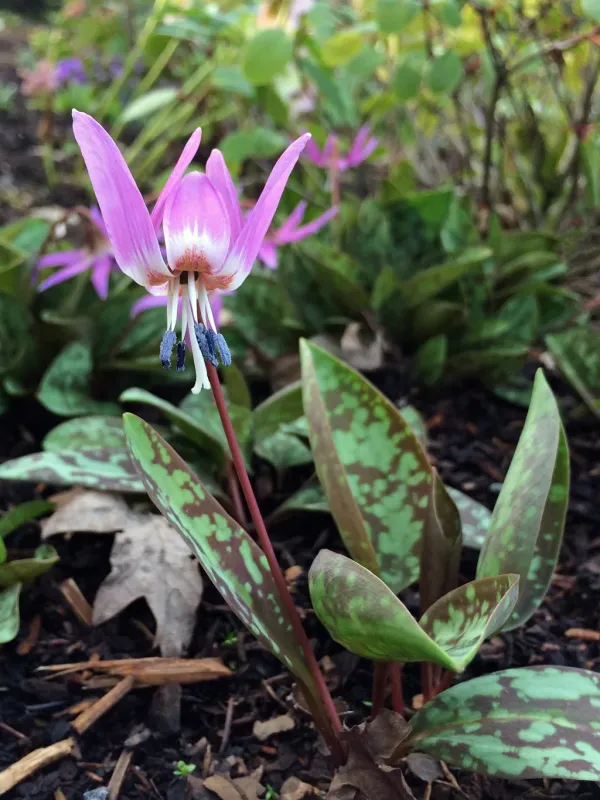
Description
Sowing dates
The Dogtooth violet (Erythronium dens-canis) is a bulbous perennial belonging to the Liliaceae family. Planting is best carried out in late summer or early autumn, while the plant is in a period of relative dormancy.
The ideal planting window is August to September, as these bulbs lack protective scales and can quickly lose moisture if left exposed. Timely planting ensures the roots establish well before the onset of winter.
When propagating by seed, sowing should occur immediately after harvesting. The seeds require stratification to germinate, and the first true leaves usually appear in the second spring after planting.
Plant bulbs at a depth of 10–15 centimeters, depending on their size. Provide a spacing of 15–20 centimeters between individual plants to ensure adequate airflow and nutrient access for healthy foliage.
Before planting, enrich the soil with well-rotted compost or leaf mold. This provides the organic matter necessary for strong growth and supplies the bulbs with essential micronutrients during the active season.
Growing requirements
This species thrives in partial shade with light, moisture-retentive, and humus-rich soil. Naturalistic woodland settings, such as under deciduous trees, provide the best growing environment for this plant.
Proper drainage is critical, as these bulbs are highly susceptible to rot in waterlogged conditions. If the soil is heavy or clay-based, it is recommended to add grit or organic matter to improve soil structure.
The plant is hardy, but in regions with severe, snowless winters, applying a layer of mulch—such as dry leaves or peat—helps regulate soil temperature and protects the sensitive bulbs from extreme frost.
The soil should ideally be neutral to slightly acidic. Maintaining consistent soil moisture during the spring flowering and growing period is vital for the plant to complete its life cycle effectively.
During the summer dormancy, avoid direct sunlight and soil overheating. The site should remain cool and protected, as extreme heat can negatively impact the dormant bulbs buried underground.
Main diseases and pests
Small rodents and voles are the primary pests of this crop, as they often target the bulbs for food. Using wire mesh baskets during the planting process is a common and effective deterrent.
Fungal diseases, specifically basal rot, are the most frequent health issues caused by excess moisture. Proper site selection and treating bulbs with fungicide before planting can significantly reduce risks.
During the early spring, slugs can cause significant damage to emerging shoots. Implementing barrier methods or using organic slug pellets can protect the young foliage during the critical early development phase.
Viral infections may manifest as mosaic patterns on the leaves or distorted flowers. Affected plants should be immediately removed and destroyed to prevent the spread of the virus to healthy stocks.
Botrytis, or grey mold, may occur in dense plantings with poor air circulation. Ensuring the site is well-drained and removing old plant debris each year are key preventative measures for healthy development.
Harvesting
Bulbs are typically harvested only for multiplication or site relocation, which should ideally be done every 5–6 years. The best time to dig them up is after the foliage has naturally yellowed and died back.
Once lifted, gently clean the bulbs and allow them to dry in a cool, shaded, and well-ventilated location. Never expose the bulbs to direct sunlight, as they are prone to dehydration and rapid damage.
Store the planting material in slightly damp peat or sphagnum moss at temperatures around 15 degrees Celsius. This prevents the bulbs from desiccating and ensures they remain viable for autumn planting.
When harvesting seeds, monitor the seed capsules closely. Gather them just as they begin to turn light brown and crack, ensuring you collect them before they disperse naturally into the garden soil.
Dogtooth violet is primarily grown for its ornamental value rather than commercial harvest. Consequently, harvesting is limited to essential horticultural maintenance required to keep the garden population thriving.