
Distichium moss
Distichium capillaceum
Description
Growing requirements
Distichium capillaceum, commonly known as Distichium moss, is a perennial bryophyte belonging to the Ditrichaceae family. It serves as a significant pioneer species in arctic and alpine environments, colonizing mineral-rich soils and rocky substrates where larger vascular plants face extreme survival challenges.
The plant strictly requires calcareous soils or rock crevices with high mineral content. It thrives in humid conditions, often colonizing sites near streams, seeps, or mountain slopes where it can benefit from constant moisture and protection from excessive evaporation during the brief growing season.
Distributed across the Northern Hemisphere, this species is highly adapted to polar and alpine climates. Its resilience to freeze-thaw cycles and ability to thrive in nutrient-poor environments make it an essential component of tundra vegetation and high-altitude plant communities.
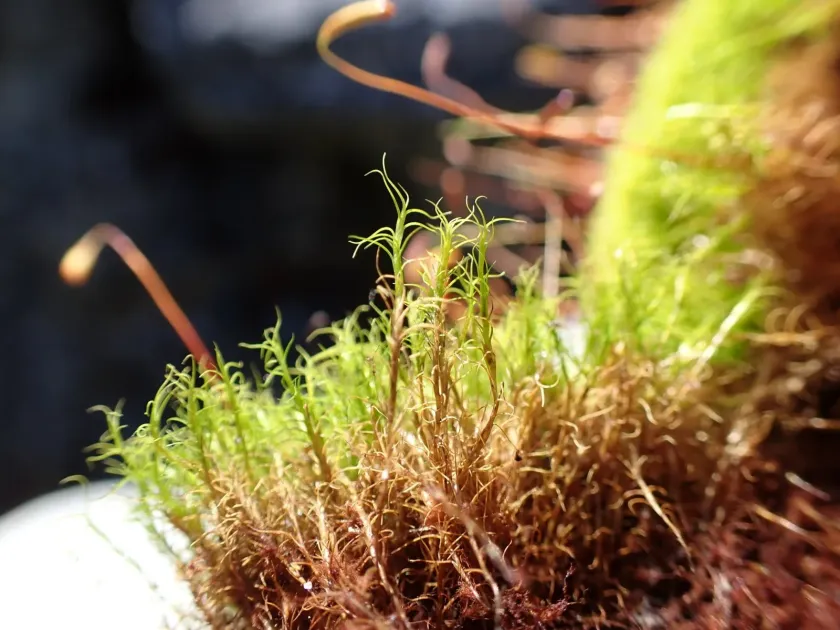
Botanically, the plant is characterized by its distinct two-ranked leaf arrangement, which creates a flattened, needle-like appearance. These leaves form dense, compact tufts or cushions, which act as a physical buffer against harsh winds and help maintain a stable microclimate within the moss colony.
Ecologically, the moss plays a key role in soil formation and stabilization. By trapping wind-blown organic matter and holding fine particles against the substrate, it facilitates the development of a rudimentary soil profile, eventually enabling more complex vegetation to inhabit otherwise barren landscapes.