
Distemonanthus benthamianus
Distemonanthus benthamianus Baill.
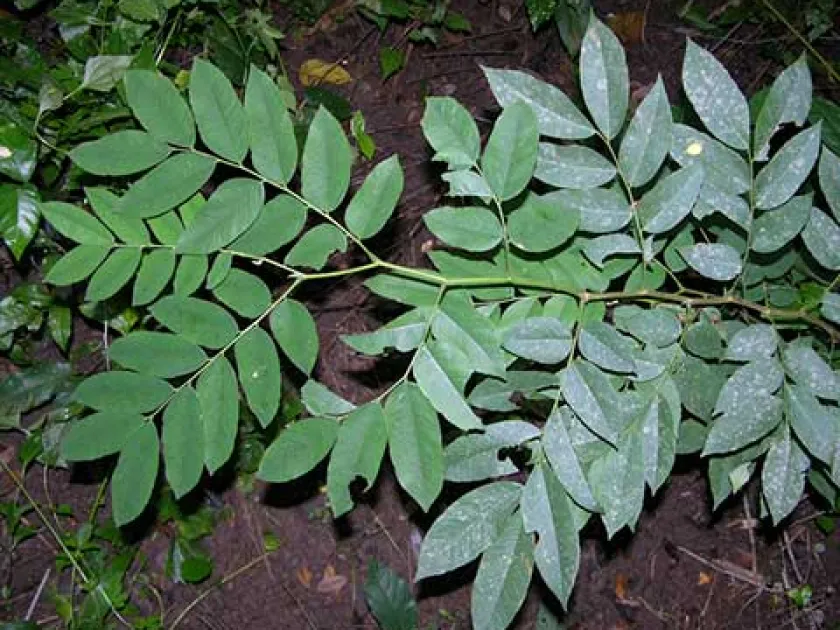
Description
Growing requirements
Distemonanthus benthamianus is a large tropical tree species belonging to the legume family, Fabaceae. Known commonly in the timber trade as Ayan or Eku, it is a significant feature of the West African tropical rainforest ecosystem.
The tree typically grows in the evergreen and semi-deciduous forests ranging from Sierra Leone down to the Congo Basin. It thrives in high-temperature, high-humidity climates characteristic of tropical zones with substantial annual rainfall.
Regarding soil requirements, the species favors deep, well-drained soils. While it can tolerate various types of forest soils, it avoids waterlogged areas, as stagnant water can damage the root system and retard tree growth.
As a legume, the tree contributes to the nitrogen cycle by fixing nitrogen in the soil. This ecological function makes it a valuable species for reforestation and agroforestry programs aimed at soil rejuvenation in degraded tropical zones.
Young trees require adequate protection from excessive sunlight during their initial growth stages. Once established, they grow vigorously, often reaching heights exceeding 30 to 40 meters, forming part of the forest canopy.
Harvesting
The primary economic value of Distemonanthus benthamianus lies in its timber. The wood is renowned for its attractive yellow-brown color, which deepens over time, and its excellent structural stability, making it highly durable.
Harvesting is typically done through selective logging practices that allow the forest to regenerate naturally. Sustainable management is crucial to balance the commercial demand for exotic hardwoods with the preservation of biodiversity.
The timber is widely exported for use in high-end cabinetry, flooring, interior woodwork, and joinery. Its workability—the ease with which it can be sawn, planed, and polished—makes it a favorite among woodworkers and furniture makers.
Beyond its industrial applications, extracts from the tree's bark and leaves are utilized in traditional medicine within its native range. Scientific interest in its phytochemical properties continues to grow for potential medicinal use.
Global demand for Ayan timber has prompted research into the plantation cultivation of this species. By establishing organized plantations, forestry experts aim to secure future supplies while reducing the reliance on clearing primary forests.