
Disphyma crassifolium
Disphyma crassifolium (L.) L. Bolus x Glottiphyllum longum (Haw.) N. E. Br.
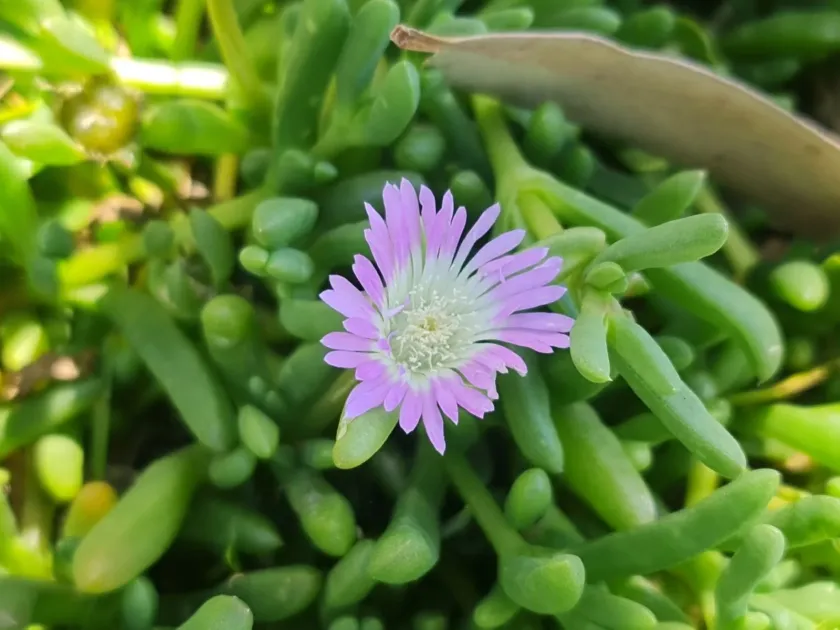
Description
Sowing dates
Propagation of Disphyma crassifolium is typically achieved through seeds or stem cuttings during the active growing season. Spring is the ideal time to start seeds, coinciding with the increase in daylight hours.
Seeds should be sown in a well-draining, sandy substrate and lightly covered. Maintaining a greenhouse-like environment with consistent moisture is crucial until germination occurs.
Cuttings are highly effective for rapid propagation. Allow the cut ends to callus for at least 24 hours before planting them into a dry, porous rooting medium.
Optimal germination and rooting temperatures range from 20 to 25 degrees Celsius. Ensuring proper ventilation is essential to prevent fungal damping-off in young seedlings.
Once established, the plants should be transplanted into slightly larger pots using a loose, nutrient-poor soil mix to encourage healthy root development.
Growing requirements
Belonging to the Aizoaceae family, Disphyma crassifolium is a succulent species native to South Africa. It thrives in conditions characterized by intense light and low relative humidity.
The growing medium must be highly porous. A typical mix consists of standard potting soil amended with plenty of perlite, pumice, and coarse sand to ensure rapid water drainage.
Watering should be deep but infrequent. Always allow the substrate to dry out completely between waterings to simulate the plant's natural arid habitat and prevent rot.
The plant performs best in warm environments. It has limited cold tolerance and should be protected from temperatures dropping below 10 degrees Celsius to avoid tissue damage.
Fertilization should be limited to the active growth phase, utilizing low-nitrogen fertilizers designed for succulents. Over-fertilization can lead to weak, elongated growth.
Main diseases and pests
Root rot caused by overwatering or poor drainage is the primary cause of plant failure. Symptoms include wilting, discolored leaves, and a soft, mushy stem base.
Mealybugs are common pests that hide in the crevices between leaves. They can be managed by using systemic insecticides or by wiping the affected areas with isopropyl alcohol.
Spider mites can become a problem in very dry conditions. Maintaining cleanliness and periodically rinsing the foliage can help prevent these infestations from taking hold.
Scale insects may also appear, appearing as small bumps on the stems. Manual removal followed by an insecticidal treatment is usually sufficient to control a minor outbreak.
Regular inspection of the plant base and root zone is the best preventative strategy against pests and diseases in this succulent species.