
Tonka bean tree
Dipteryx odorata (Aubl.) Willd.
Description
Growing requirements
Dipteryx odorata, commonly known as the tonka bean tree, is a large canopy-forming tree belonging to the Fabaceae family. Native to the tropical regions of Central and South America, it thrives specifically in the humid lowland forests of the Amazon basin.
The tree requires a tropical climate with high humidity and consistent annual temperatures. It is sensitive to prolonged droughts and thrives best in deep, well-draining, nutrient-rich soils. In commercial plantations, ensuring proper site selection is critical to accommodate the tree's deep taproot system.
Agricultural management involves careful spacing to allow for the massive expansion of the crown as the tree matures. Propagation is typically achieved through seeds, though the long germination period and the sensitivity of seedlings necessitate nurseries with controlled environmental conditions for the first few years.
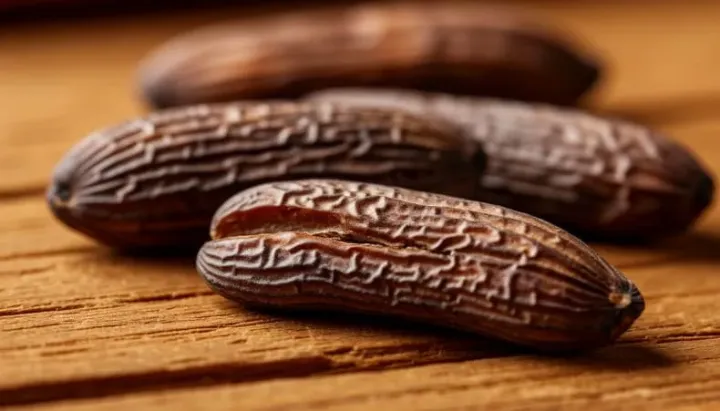
Botanically, the tonka bean tree is distinguished by its leathery, dark green foliage and its ability to fix atmospheric nitrogen, contributing to soil fertility. The tree produces hard-shelled fruits, each containing a single, dark, wrinkled seed rich in coumarin, which provides the characteristic scent.
The primary economic value lies in the seeds, or tonka beans. They are harvested for the extraction of coumarin, which is extensively utilized in fine perfumery, as a flavoring agent in culinary applications, and as an additive in high-end tobacco products to enhance the aroma profile.
Main diseases and pests
Significant threats include root rot pathogens that thrive in waterlogged soil conditions. Maintaining proper drainage and preventing soil compaction are essential strategies for mitigating fungal disease pressure within a plantation setting.
Pest management focuses primarily on wood-boring beetles that can damage the trunk, as well as specific weevils that infest the fruits before harvest. Integrated pest management practices are often employed to monitor tree health and prevent significant economic losses during the fruiting season.