
Diplarrhena moraea
Diplarrhena moraea
Description
Sowing dates
Propagation is primarily achieved through seeds sown in early spring, requiring a consistent temperature of around 18 degrees Celsius for germination.
The seeds should be sown in a well-draining seed-starting mix, kept moist but not waterlogged to ensure successful seedling establishment.
Clump division is a common agricultural practice used to propagate established plants, performed during the dormant season or immediately after flowering.
When transplanting, it is crucial to handle the root system carefully to avoid unnecessary stress, as the plant is sensitive to significant root disturbances.
Spacing should be adequate, typically 30–40 cm apart, to allow for optimal air circulation and development of the foliage and flower stalks.
Growing requirements
Diplarrhena moraea, known as the butterfly flag, is a perennial herbaceous plant belonging to the Iridaceae family and native to Australia and Tasmania.
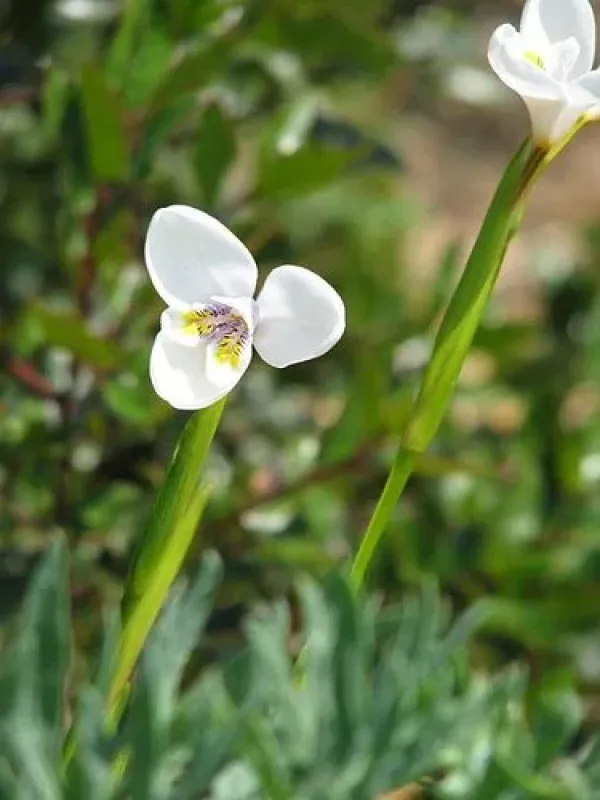
The plant features distinctive white flowers with violet and yellow nectar guides, blooming on slender, firm stalks during the spring and summer months.
It thrives in moist, well-drained soils and prefers locations that offer partial shade, avoiding the intense heat of midday sun in warmer climates.
Soil pH should ideally be neutral to slightly acidic, enriched with organic matter to support the plant's nutritional needs throughout the growing season.
- Requires consistent soil moisture during active growth.
- Prefers sheltered locations to protect from strong winds.
- Can be grown in containers in cooler regions.
Main diseases and pests
Fungal infections, particularly root rot, represent the most significant threat to Diplarrhena moraea, especially in environments with poor soil drainage.
Leaf spot diseases may occur under conditions of high humidity and poor ventilation, requiring localized removal of infected foliage and improved airflow.
Slugs and snails can cause substantial damage to the young leaves and shoots, necessitating protective measures during the early spring growth period.
Integrated pest management, including the removal of debris around the plant base, is effective in reducing the risk of pest infestation.
If chemical interventions are necessary, fungicides should be applied carefully according to local agricultural regulations to avoid environmental damage.