
Dinema polybulbon
Dinema polybulbon
Description
Growing requirements
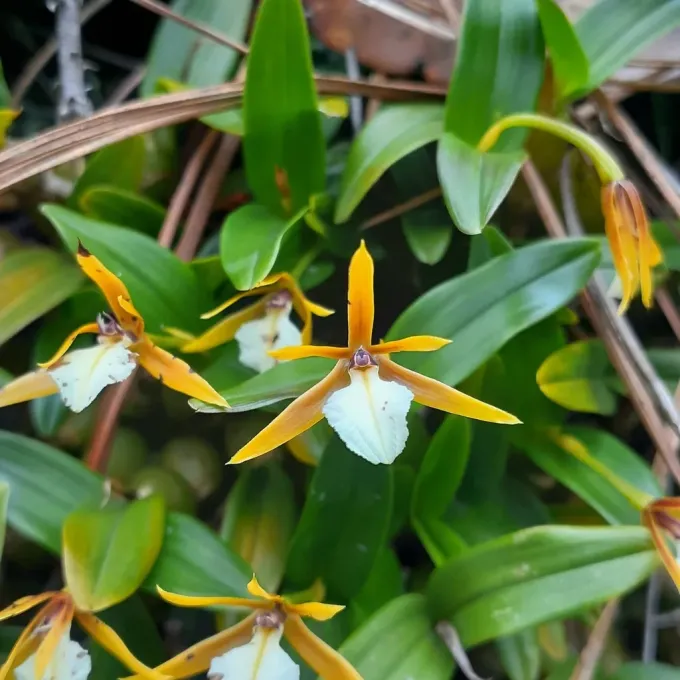
Dinema polybulbon is a miniature epiphytic orchid belonging to the Orchidaceae family. Native to the tropical forests of Mexico and the Caribbean, this species is highly regarded among collectors for its small, clustered pseudobulbs and distinct fragrance during its blooming season.
The cultural requirements for this orchid include bright, indirect light. It thrives when placed in locations that mimic the filtered light of a forest canopy. Providing consistent, though not excessive, light is essential for the development of healthy, robust pseudobulbs throughout the year.
Temperature management is critical for the long-term success of Dinema polybulbon. It prefers intermediate to warm conditions, with a noticeable drop in temperature at night. This cooling period is often the trigger for the plant to begin its flowering process during the appropriate cycle.
The substrate must be extremely well-draining, as the roots of this epiphyte require constant access to oxygen. Mounting on bark slabs or using open-basket containers with large-grade pine bark is the industry standard for this species to ensure rapid drying after watering.
Humidity management involves maintaining a range of 60 to 70 percent. Since the plant originates from humid tropical environments, it struggles in dry indoor air, making humidity trays or automated misting systems highly beneficial for its overall health and vitality.
Main diseases and pests
The most significant threat to Dinema polybulbon is root rot, typically caused by stagnant moisture around the roots. Once the root system is damaged by chronic overwatering, the plant struggles to recover and becomes susceptible to various pathogens.
Pests such as spider mites and mealybugs are common adversaries in indoor orchid cultivation. These insects thrive in dry environments and can quickly infest the small nooks between pseudobulbs, making them difficult to detect and eradicate without regular maintenance.
Fungal spotting on the foliage is often a direct result of inadequate airflow and persistent moisture on leaves. To mitigate this risk, it is essential to ensure that the environment remains well-ventilated, especially during periods of high humidity or lower temperatures.
Bacterial soft rot can occur if water becomes trapped within the growth points or the base of new pseudobulbs. This condition progresses rapidly, so any water that accumulates in these areas should be removed immediately using a paper towel or gentle airflow.
To keep the plants healthy, implement a proactive pest control strategy. Regular monitoring for sticky residues or discoloration on the leaves allows for timely intervention, whether through mechanical cleaning or the application of appropriate horticultural treatments.