
Dimetia scandens
Dimetia scandens
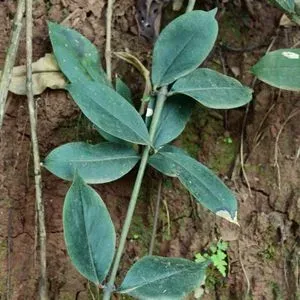
Description
Growing requirements
Dimetia scandens, a member of the Rubiaceae family, is a perennial climbing plant native to the tropical and subtropical regions of Asia. In its natural habitat, it thrives in moist forest understories, utilizing other vegetation for structural support.
This species is well-adapted to high-humidity environments, requiring a stable tropical climate to reach its full growth potential. It typically grows in regions where the temperature remains consistently above 20°C, as it lacks cold hardiness and is highly sensitive to frost.
For successful cultivation, the soil must be rich in organic matter and possess excellent drainage characteristics. While the plant loves humidity, it is susceptible to root rot if the soil becomes waterlogged, necessitating careful water management and a porous substrate.
The plant demonstrates a climbing habit, meaning it requires vertical support such as trellises or netting in an agricultural setting. This vertical training not only facilitates harvesting but also improves air circulation, which is vital for preventing the development of fungal diseases.
Regarding light, Dimetia scandens prefers bright but indirect light. Direct exposure to intense midday sun can cause leaf scorch, whereas deep shade may result in etiolation, where the stems become weak and overly elongated at the expense of leaf density.
Yield
The primary value of Dimetia scandens lies in its ethnobotanical applications. It is traditionally harvested for its secondary metabolites, which are studied for their potential anti-inflammatory and therapeutic properties in pharmaceutical research.
In terms of yield, the biomass of the plant is determined by the frequency of pruning and the availability of nitrogen-rich fertilizers. Under optimal greenhouse conditions, it is possible to harvest biomass multiple times throughout the year due to its vigorous vegetative regeneration.
Standard agronomic practices for this crop include a systematic harvest of young, succulent shoots. By harvesting periodically, farmers can stimulate the plant to produce more lateral branches, thereby increasing the total quantity of harvestable material.
Post-harvest management involves drying the material under controlled temperatures to preserve the chemical integrity of the active compounds. This step is critical for ensuring the quality and market value of the final product.
As interest in plant-based medicine grows, the cultivation of this species represents a niche but potentially lucrative opportunity for farmers focusing on high-value herbal ingredients.
Main diseases and pests
Cultivation of Dimetia scandens in closed environments often faces challenges from fungal infections such as powdery mildew and root rot. These issues are frequently the result of inadequate air circulation or incorrect irrigation practices.
Insect pests, particularly spider mites and aphids, pose a significant threat. These pests target the soft, growing tips of the climbing stems and can cause rapid decline in plant health if left unmanaged.
Integrated Pest Management (IPM) is highly recommended. This involves monitoring the canopy for signs of infestation and utilizing biological control agents, such as predatory mites, to suppress pest populations without chemical interference.
Environmental control is the most effective preventative measure. Maintaining consistent moisture levels and providing sufficient spacing between plants helps to reduce the microclimate humidity that fungi require to propagate.
- Regular inspection for early signs of pests.
- Use of well-ventilated greenhouse systems.
- Sanitation protocols for tools and equipment.