
Northern bush honeysuckle
Diervilla lonicera
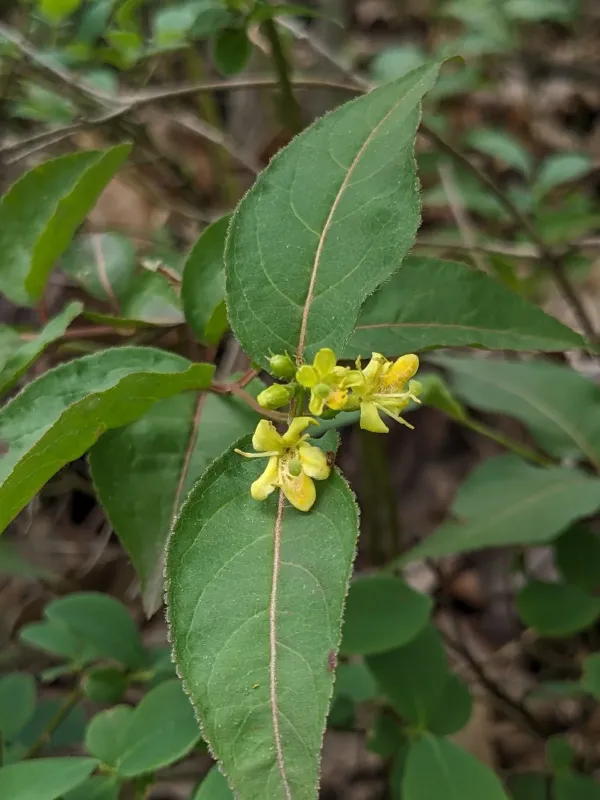
Description
Growing requirements
Northern bush honeysuckle (Diervilla lonicera) is a deciduous shrub belonging to the Caprifoliaceae family. Native to North America, it is commonly found in dry, rocky, or sandy soils, as well as forest clearings and woodland edges.
This plant is highly valued for its adaptability to poor soil conditions. It thrives in locations where other decorative shrubs might struggle, making it an excellent choice for stabilizing slopes and preventing erosion.
Diervilla lonicera exhibits high cold hardiness, allowing it to withstand harsh winters without special protection. It prefers full sun to partial shade, where it produces characteristic small yellow flowers.
The cultural requirements are modest: light fertilization in the spring and supplemental watering during the first growing season are usually sufficient for establishing a healthy, vigorous root system.
In landscaping, it is utilized for mass plantings, borders, and as a ground cover. Its ability to spread via suckers makes it effective for quickly covering bare patches in a garden setting.
Main diseases and pests
One of the primary benefits of the northern bush honeysuckle is its exceptional resistance to common garden pests and diseases, which simplifies the overall maintenance process for gardeners.
Root rot remains the main threat to the plant's health, particularly in areas with heavy, waterlogged soils. Ensuring proper drainage at the planting site is the most effective preventative measure.
Foliage may occasionally be affected by powdery mildew if the plants are crowded together, preventing sufficient airflow. Pruning helps to maintain healthy, well-ventilated branches throughout the season.
Pests like aphids may target tender new growth during hot, dry summers. Typically, these outbreaks are minor and can be managed by a simple water spray or natural predatory insects.
Regular sanitation, which includes removing dead or diseased wood, ensures the longevity of the shrub and prevents the accumulation of pathogens that could otherwise weaken the plant.