
Didymocheton gaudichaudianus
Didymocheton gaudichaudianus
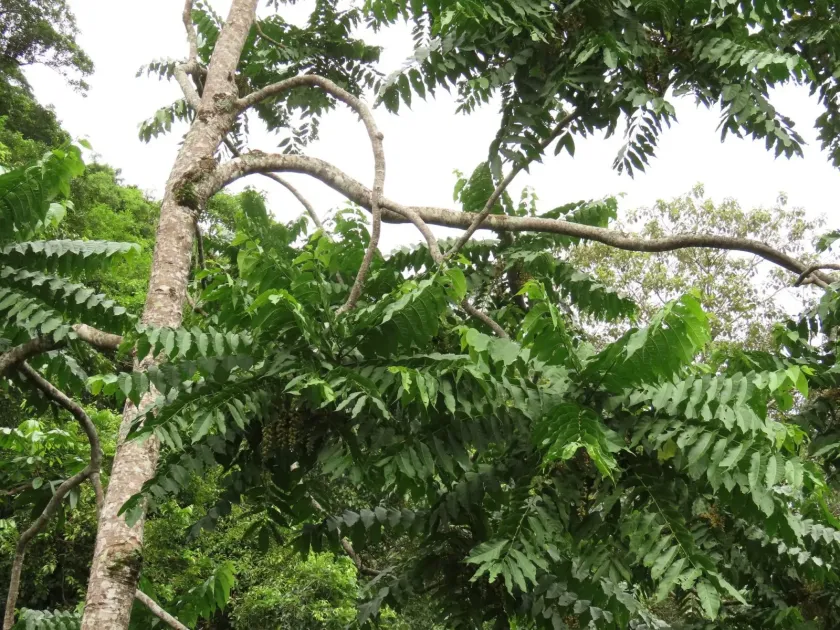
Description
Growing requirements
Didymocheton gaudichaudianus is a notable member of the Meliaceae family, native to the tropical regions of Southeast Asia and the Pacific Islands. As an evergreen tree, it thrives in environments characterized by high annual rainfall and consistently warm temperatures.
For successful cultivation, this plant requires deep, nutrient-rich soils that possess excellent drainage capabilities. Waterlogging is detrimental to its development, as it promotes root-related pathogens and hinders proper respiration of the root system.
Botany-wise, the species is distinguished by its dense foliage and stable structural growth. It is primarily adapted to partial shade, making it a suitable candidate for planting under taller canopy trees or in areas with diffused sunlight.
Agronomic management involves regular moisture maintenance during the early growth stages and the application of organic fertilizers to enrich the soil profile. Pruning is usually limited to the removal of deadwood to maintain the overall health of the tree.
In terms of хозяйственного использования, the species is valued for its wood quality and its contribution to local agroforestry systems. It helps in maintaining soil stability and contributes to the local biodiversity in tropical plantations.
Main diseases and pests
The primary threats to Didymocheton gaudichaudianus include various root and collar rots, often triggered by poor drainage or excessive humidity around the root crown. Pathogens like Phytophthora are frequent culprits in stressed environments.
Stem-boring insects present a significant risk to the plant's structural integrity, as they can tunnel into the wood and weaken the trunk. Early detection of holes in the bark or sawdust accumulation is critical for initiating control measures.
Leaf-feeding insects and scale infestations may also occur, leading to chlorosis and reduced photosynthetic activity. If left untreated, these pests can severely stunt the growth of young specimens and reduce the overall timber yield.
Integrated Pest Management (IPM) is highly recommended for this crop, emphasizing cultural practices such as spacing, sanitation, and the use of beneficial insects to control pest populations naturally before resorting to chemical interventions.
Maintaining a clean plantation floor by removing decaying plant matter helps significantly in preventing the lifecycle progression of many fungal spores and larvae. Regular monitoring programs are essential to ensure the longevity and health of the stands.